Diana Jill Moxhay, 74 PEAKS ISLAND – Diana Jill Moxhay, a resident of Peaks Island for the past decade, passed away gracefully on Saturday, May 21, 2016, at her home, surrounded by family, following a brave battle with cancer.
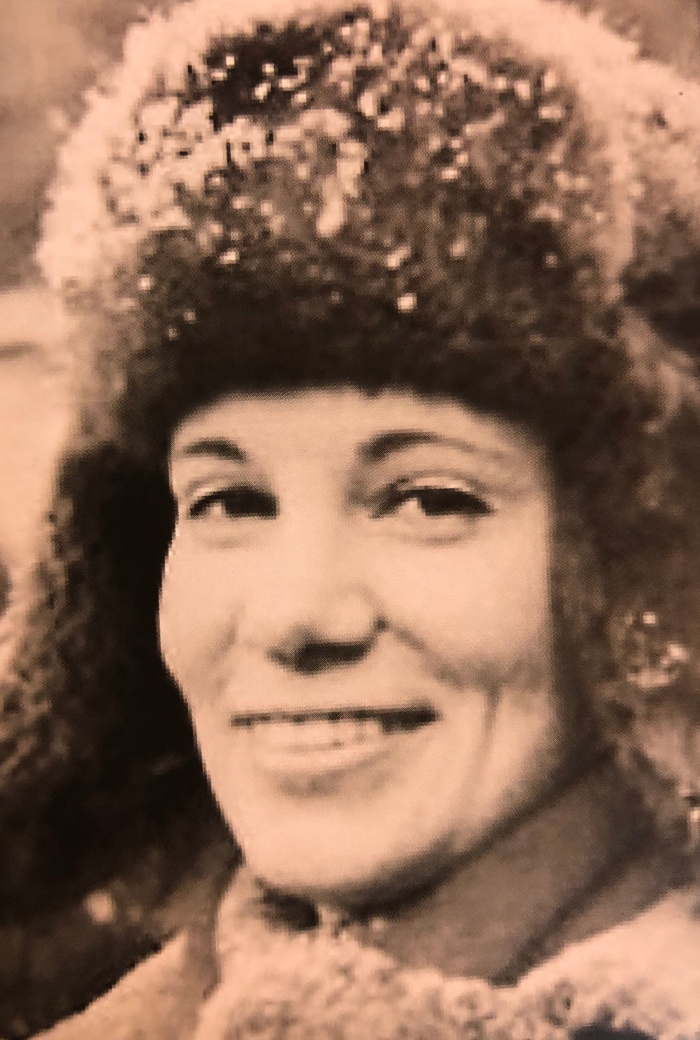
Born on March 17,1942, in Rye, N.Y., she was the daughter of Jack and Dorothea Moxhay. A 1960 graduate of Rye High school, she matriculated to Smith College in Northhampton, Mass., and in 1964 became the first member of her family to graduate from college. Diana possessed a competitive spirit and participated in sports, particularly lacrosse, throughout her school years, in an age when that was far from the norm for young women.
Following college, she worked for Radio Liberty Munich and Voice of America, soon being recruited by the State Department’s Foreign Service. Diana had a fantastic facility for language, speaking half a dozen comfortably; but her greatest passion was for Russian, which she began to learn while at Smith to better understand and enjoy the works of Dostoevsky and other Russian authors in their native tongue.
In 1971, Diana became the first female Foreign Service officer posted to the American embassy in Moscow. Her mission there focused on creating a deeper cultural understanding between the two great superpowers, long before official relations began to thaw.
Over the next three decades, Diana was posted in Chile, Cameroon, Sierra Leone, Somalia, Russia again, Belarus, and Austria, reaching the most senior levels of the Foreign Service. Her professional life was spent confronting historic forces like the Cold War and colonialism and shaping the world that was to come following their collapse. She not only had a front row seat to history, but she was a direct participant in it, and in her retirement would casually recount her interactions with presidents and dictators.
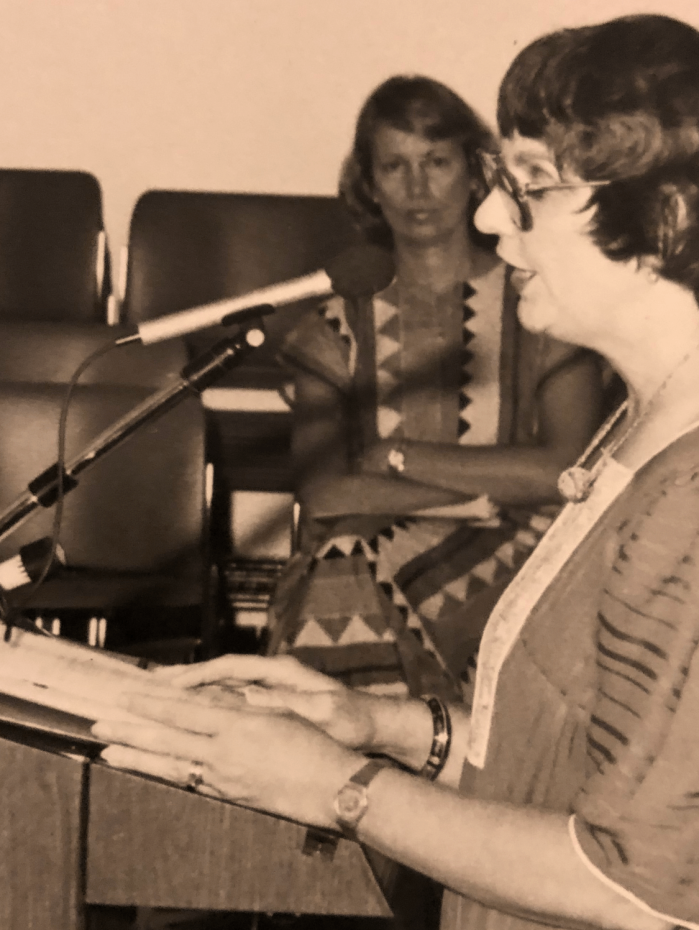
Ever a champion of democracy and free speech, Diana took particular delight in having incurred the personal ire of despots like Vladimir Putin, and Alexandra Lukashenko, both of whom eventually barred her from entering their countries, resentful of her work to empower the free press.
In spite of her proletarian loyalties, Diana was a woman of impeccably refined taste, with the deep appreciation for an encyclopedic knowledge of classical music, opera, ballet, and fine arts and was personal friends with numerous prominent Russian dancers, artists, and musicians.
Having spent the majority of her life fighting for ideals and enabling high-level diplomacy in every corner of the globe, Diana designed and retired to a beautiful home overlooking the sea on Peaks Island, where she could finally be close to family and enjoy a wonderful community. Diana is survived by her brother David, his wife Judy; her brother Peter, his wife Kathryn and their children Olwyn, Imogen and Nikolai; her nephew Christopher, his wife Bonnie; and her cousin Gregg, his wife Hazel
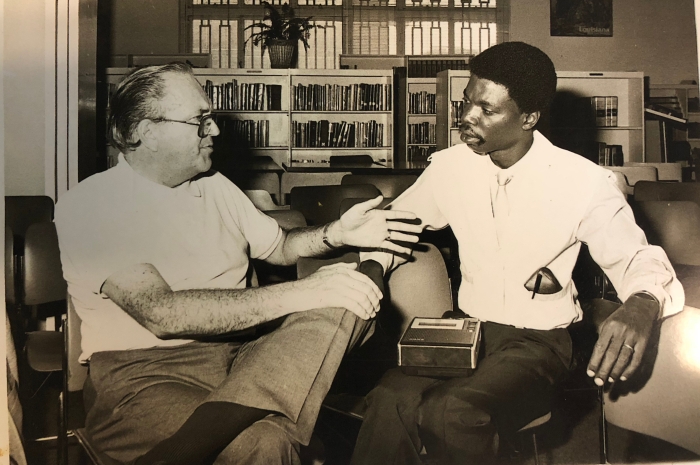
PS: I was in my office at The Globe newspaper on 40 Rawdon Street in Freetown, the same building that used to house The Tablet Newspaper, when Diana popped in and invited me to the American embassy. As a champion of the free press, she was captivated by the paper’s output. One that was independent, in a one-party state, headed by Siaka Stevens, the president then. Stevens had turned his back on America to stay in power for life. He became friends with China. China built a national stadium, Youyi building for the government ministries and a new city hall in the city of Freetown.
One of his stalwarts (name withheld) had burned the American flag in public. Medical doctors were now trained in Russia and Cuba. Lada cars – Russian made vehicles were aplenty on the streets of Freetown. Stevens’ personal security unit, the notorious Special Security Division (SSD) were trained in Cuba.
I became a regular face at the embassy. Ray Pardon and Arthur Lewis ( U.S. ambassador and wife Fay), became my friends also. So began our relationship which was to blossom into a close but professional and platonic one.
One day I went to the embassy, and Diana said to me, “Francis, there is a vacancy at VOA to report from Freetown and the bureau chief Sonja Pace( based in Abidjan Ivory Coast) will be here. You will be a good fit for it” The former VOA reporter Royston Wright(blessed memory) had just died of cardiac arrest in his early 40s.
Sonja( pronounced Sonia) was in town to cover the change of guard. Stevens was an octogenarian and was getting tired of ruling. He wanted to hand over power to his hand-picked successor.
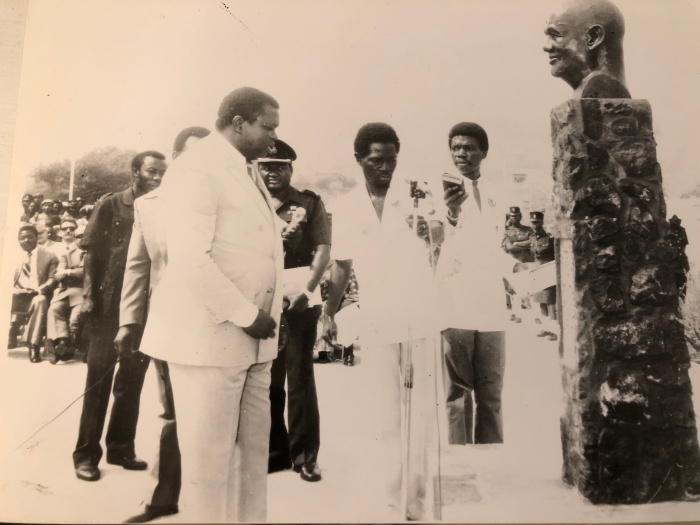
At the first press conference, following Stevens’ retirement, I was able to sit next to Sonja because I.B. Kargbo an influential journalist turned politician lately had put me in charge of the conference arrangements. I had left the Globe because of editorial disagreements and moved over to I.B.’s New Citizen newspaper, whom I had worked with at the Tablet, and we were friends. At this time, we did not share the same convictions anymore but was too annoyed to stay at The Globe and I have never been interested in politics. Also by then one of the key writers I relied on, Kortor Kamara had left for the U.S. And I.B. treated me with respect. God bless him and Ms. Daisy Bona.
After I expressed my interest in the job, Sonja asked that I send her 30 lines(correspondent’s report distinct from news advisory which is 10 lines) on the ceremony that preceded the press conference. I dropped my story at the front desk of the Brookfields hotel where she stayed. The next day she called me saying, “I like your style of writing. How would you like to work for us? We cannot guarantee your safety, but if you are arrested, we will put pressure on the government for your release.” she went on.
Now, go figure the state of the press in Sierra Leone then. It was a dangerous job for which my mom had given up on me saying I was committing suicide.
So, I was American, before I became an American citizen. I was called a CIA agent and worse names. America gave me a job when my country of origin had denied my application to own my own newspaper. The Globe was not mine. I left Sierra Leone, and I have never looked back. I still love the country, my country?
OK, this is about Diana, not me. I believe you get it. I was about to write on race in America when she came to mind. That was when I found out she passed away two years ago. I contacted the newspaper on Peaks Island, where she spent her last few days, sent them a photo of Diana with words of condolence from my family and me as proof of our friendship and they sent me this beautiful piece. May Diana’s soul rest in perfect peace.
 Francis Baldwin Deen
Francis,
This is a fascinating piece. It is interesting how your journey as a journalist has come full circle with an obituary for the late Diana Moxhay linking the past and present.
Best,
Tamba
_____________________ Tamba E. M’bayo, PhD Associate Professor Department of History 202J Woodburn Hall Morgantown, WV 26506 Phone: 304-293-6198 FAX: 304-293-3616 ________________________________
LikeLike
Good morning Tams,
Indeed.
We have not talked on the phone since you got back from London. Diana was special. You will be hard pressed to find a journalist in Sierra Leone during her days as director of information at the American embassy who disliked her. Remember, the American embassy and that of Russia were located on the same street, almost directly opposite each other as if watching each other’s moves. Perhaps so.
I understand the new embassy is the largest in West Africa and is located on the outskirts of Freetown, first for space and second for security reasons in this age of terrorism.
It was in 1985 that I first laid eyes on a computer. One evening, she took me into a room opposite her office and said: “Francis, we now have computers.” I could make nothing of what at the time looked like a small TV to me. Our means of reporting was by TELEX. LOL
I had to go to the Sierra Leone External Telecommunication building on Water street to file my reports or do so by telephone since VOA is radio. The problem with the telex machine as with the old typewriters, once you make a mistake, you cannot erase it.
I do have an example which I will post under photos in a moment. You will notice some handmade corrections and the ink is two colors when the ribbon is almost worn out. I had to handwrite some portions to make it legible for readers. Of course, Sonja’s on the other end was ok.
I believe wire services such as AFP, AP, and Reuters still utilize some modern version of telex machines which could be found in newsrooms around the country.
LikeLike
Fascinating indeed!
LikeLike
I could not sleep when I found out about her death.
LikeLike
Baldwin the pic of Diana at her desk at American Embassy in Freetown is not showing, kindly send to cumale@aol.com. I see the journalist bug dae thrive in you! Good going, bruh! – Cumalé
LikeLike
Hi Cumale,
These have been some interesting times in journalism with the internet injection targeting every layer of the mind and affording access with convoluted stories. The pic in question is there. Sometimes it just takes a while to show up depending on the speed of the wireless internet (WiFi)
However, I will accede to your request. Always good to hear from you, and stay safe.
LikeLike