Blog

BIRTHDAYS

I was born on July 24, 1955. That makes me 66, and I attach no secret meaning or symbolism to it. I do not consider birthdays special since they are not unique to anyone. Everyone has one, and you can only have one. On the day of my birth, millions of others were born across the globe, so as much as I celebrate them, the common thread is that we grow old together, as age is not just a number. You get old, weaker with muscle loss, wrinkled, then you wither and die.

I share this birthday card, made and given to our boss at CoreLogic, where I worked, in charge of an offshore group located in India, to express how birthdays can be fun to celebrate using candies. Get 100 Grand to chew on your birthday, and you should be happy you are still above ground.

On the top left of the card, I wrote: “Birthdays come only once in a year, so make sure you enjoy this ’cause you will have to wait till 2016 to get another.”

Happy 2022.

PS:

(Photo -Jan 8, 2022)

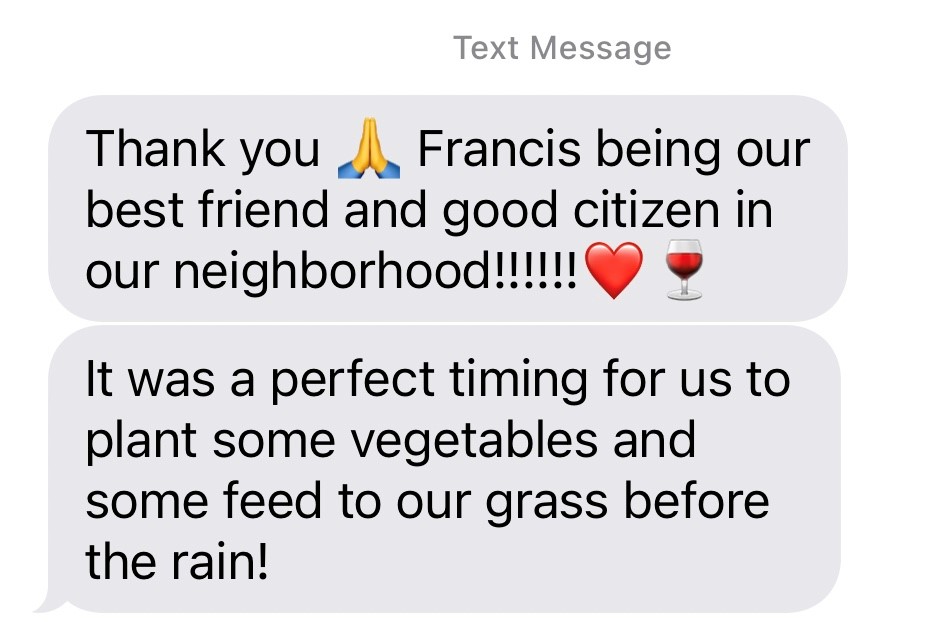
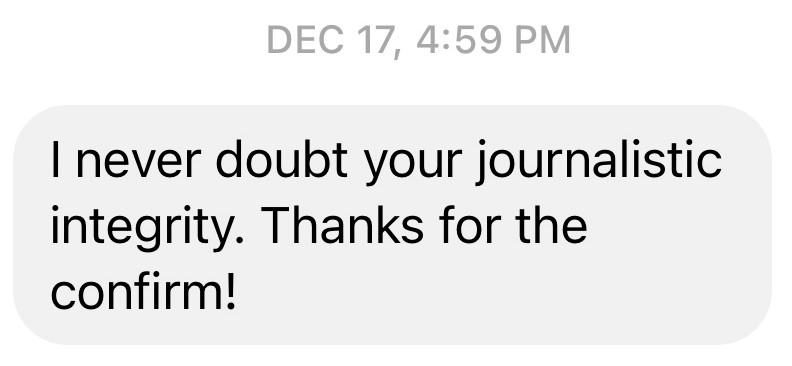
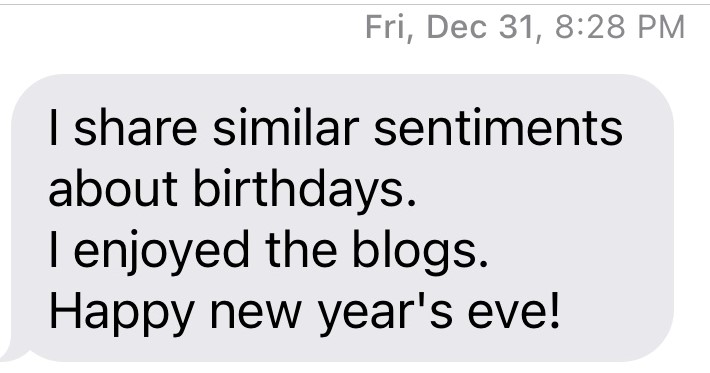
Some riveting reactions by texts. Names withheld.

You can read the story on tornadoes here, posted July 13, 2018

NOT “A Nation of Immigrants”

Book report

Roxanne steers an unusual path that is fair while acknowledging our country’s failings and clumsy attempts by many to forge a false account of connected events, leaving forests behind.

Such attempts are nothing more than jury-rigging.

Claims that “America is a nation of immigrants” made by presidents are discordant with facts laid bare in this book. Raspy and jarring, she displays a lack of harmony with the famous line produced and discharged formally and with authority that America is a nation of immigrants.

For Roxanne Dunbar-Ortiz, that is a lot of guff! Openly conveying such sentiments, if myths, is harmful.

This fundamental change in approach reveals the true nature of America as it wrestles with settler colonialism, white supremacy, and history of erasure and omission. With a lone exception (Donald J. Trump), John F. Kennedy, Barack Obama, and Joe Biden have all paraded this feel-good myth.

She puts down that the official negation of the US as a nation of immigrants by Trump is unlikely to change the liberal rhetoric. To be clear, Trump is a son of a European immigrant mother and grandfather and is married to one. Maybe that is why he prefers people from Norway, not Haiti, Mexico, or Nigeria.

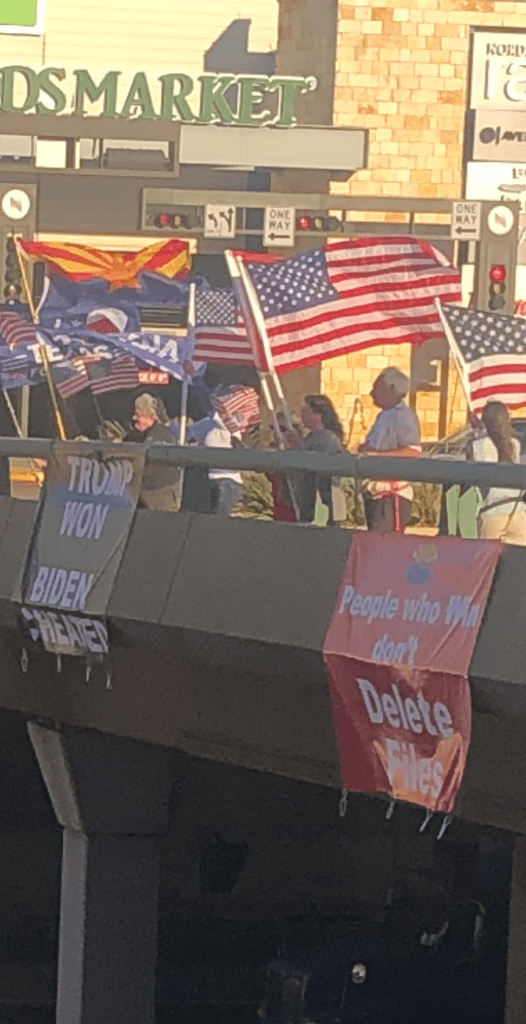
This photo was taken October 4, 2021
driving on US Highway 75 in Dallas, Texas, “Trump Won Biden cheated.” People who win don’t delete files.”
BUT PRESIDENT JOE BIDEN WON THE 2020 ELECTION

And Alexander Hamilton, one of the founding fathers, was born in the Caribbean, was not an immigrant, and was no friend of immigrants, as this book shows. On the contrary, his Federalist Party pursued anti-immigrant policies, states Roxanne. Moreover, he enslaved people, as did George Washington.

She writes about the denial of American racism, with police violence as the most tangible expression of systemic racism. She confirms that police killings of black people have become visible with the presence and easy access to video recordings reducing unpublicized police killings.

She declares that “being black in the United States is a marker of slavery. Consequently, a black individual is a principal target of racial discrimination and violence, mimicking the violence imposed on black bodies under slavery.”

Addressing Arrivants, she bemoans some more known facts. First, “Enslaved Africans did not come to the Americas as immigrants, indentured servants, or settlers. Instead, indigenous agrarian villagers were kidnapped or taken as captives in wars, forced-marched in groups to the Atlantic coast.” Second, “they were transported across the ocean against their will and with violence so unbearable that many committed suicides.”

On Native Americans, she believes “the US republic was born from its birth the engine of capitalist accumulation in expropriating native land to sell to land speculators, slaves and later the railroads and white settlers, under the Homestead Act.’

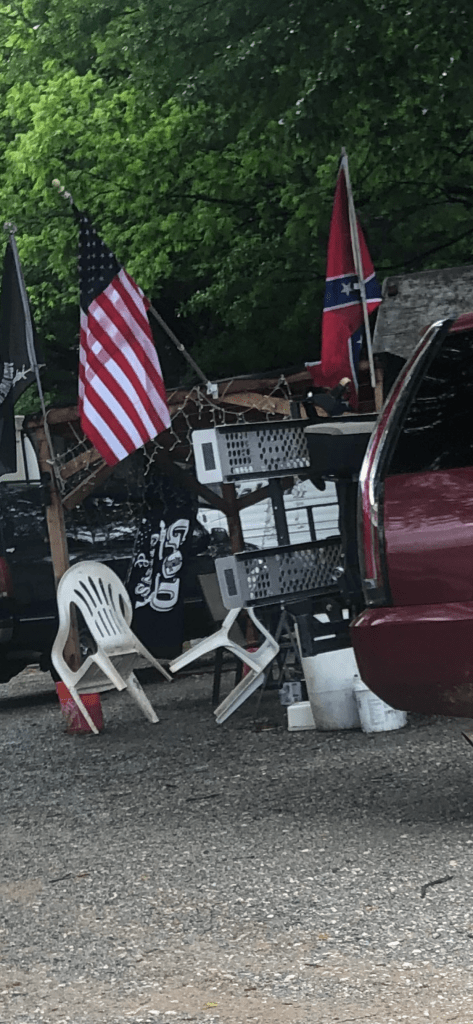
Flags @ an RV park, Colbert, immediately entering Oklahoma from Texas on highway 75N.

This book provides insight into Settler Colonialism, Private Property on Steroids, Free-Soiler Imperialism, Settler-Colonialism as Genocide, and the Settler Move to Innocence. In addition, there are explanations of Settlers’ Claims to Indigeneity in Appalachia, Rancher Indigeneity, Irish Settling, Continental Imperialism, US Colonial Occupation, The Border, Americanizing Columbus, and more. (All her words)The longest chapter, “Yellow Peril,” highlights this country’s long history of anti-Asian sentiments in forty-eight pages.

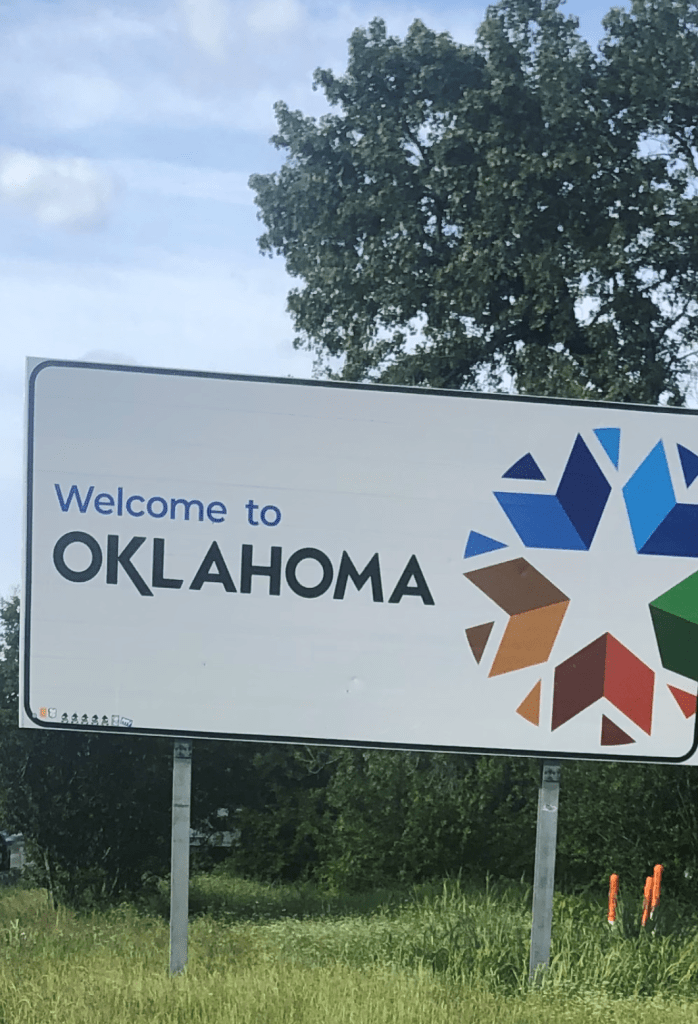
The old sign on Highway 75 N welcoming you to Oklahoma says “Native America.” May 2013
Glaring Erasure! The new sign with “Native America” removed -June 2021
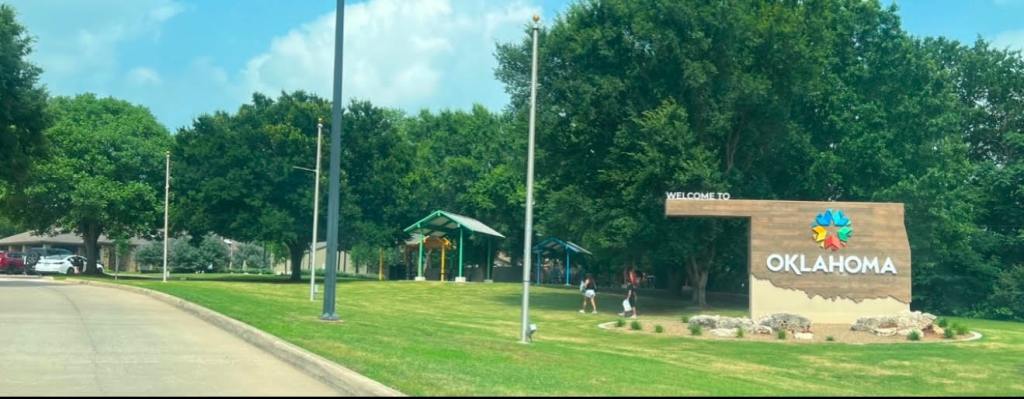
The sign has been redone. (2024) Quite an evolution.
North Park Blvd, above highway 75 Dallas, Texas, October 4, 2021

Acclaimed reviews are in order: “Dunbar-Ortiz’s fascinating and accessible historical account forces a reckoning with the various layers of the US imperialist project, from territorial control to economic and political influence at the expense of Black populations, migrants, and indigenous peoples.” Alexandra Delano Alonzo

“A compelling counter-narrative to America’s autobiography as the making of “the nation of immigrants,” Roxanne Dunbar-Ortiz not only chips away at this settler account but also provides the narrative glue for an emancipatory movement beyond the settler-native dichotomy.” Mahmood Mamdani

Roxanne is the winner of the 2015 American Book Award; professor emerita, born in San Antonio, Texas, grew up in Oklahoma.

You must read this book!

PS: What is now Central Park in New York was a settlement of predominantly African Americans in the 19th century.

Oklahoma’s Old License Plate
Oklahoma’s New License Plate
I took this shot in Greenwood, Tulsa, in June 2020, because of the inscription.

This land is your land” by Woodie Guthrie is deep. Please read about it.

RACE

It will be hard to give reasons or cite evidence against the thought or suggestion that, relentlessly, people are grouped based on shared physical or social features belonging typically to a person to determine the identity and inappropriately, their worth or capabilities.

This set of circumstances has been obtained since time immemorial and goes on rampantly even now. Over time, the expectation has been that the young people’s current breed would be creating a better world. But when we have the free world leader espouse hatred, bigotry, racism, theft, and corruption, it becomes astonishing that there can be children today, bereft of behavior that conforms to accepted standards of morality and responsibility.

It came as no surprise to learn that white high school goers from Archer City in Texas found it amusing to burst out into chants of build the wall at Hispanic students during a high school volley ball match further south, in Snyder Texas, echoing Donald J. Trump’s rally-goers’ conduct.

Archer City Theatre

Archer City, Texas, with a population of under 2000, predominantly white, is about two hours away from Dallas. Before white settlement, Apaches, Wichitas, Tawakonis, Kichais, Caddoes, Comanches, and Kiowas camped and hunted in the County area. Its fatty deposits of oil and gas, strengthened by its plains and prairies soil, have created sustainable commercial life for its current inhabitants.

It is a Republican stronghold, and Trump flags proliferate the landscape. Hopes of a successful 2020 election recount to overturn the result are expressed by yard signs. But unlike Trump, there is the belief in renewable energy, so for a stretch of about 15 miles from Archer City to Windthorst, there is wind technology juxtaposed with oil pumps.

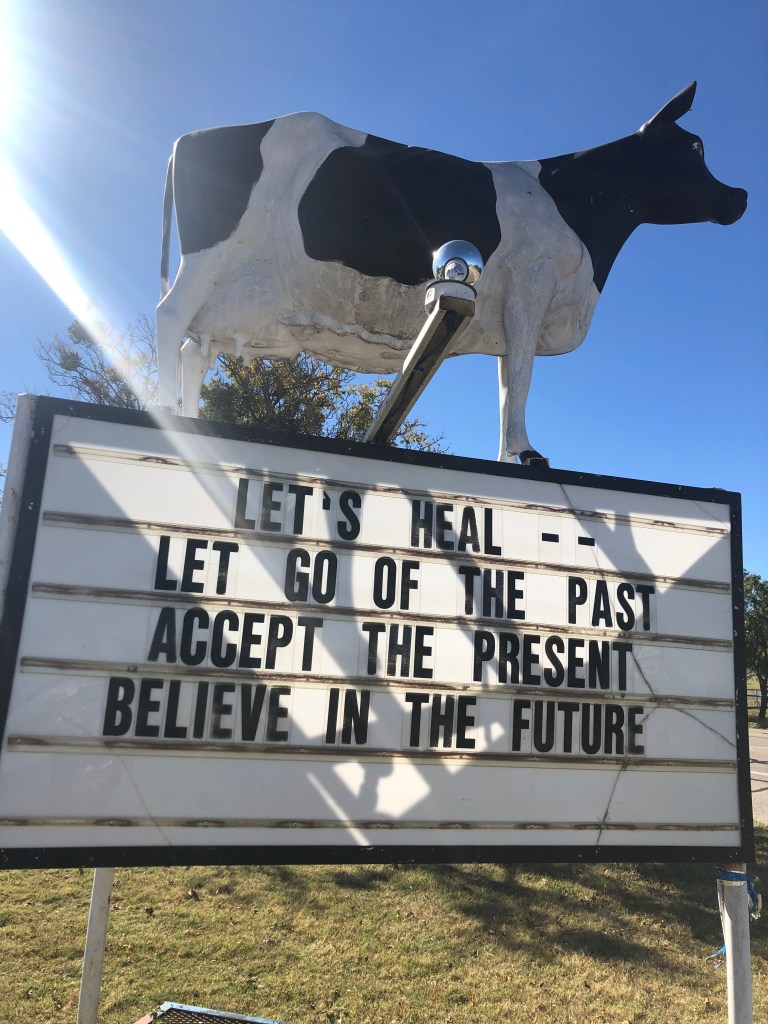
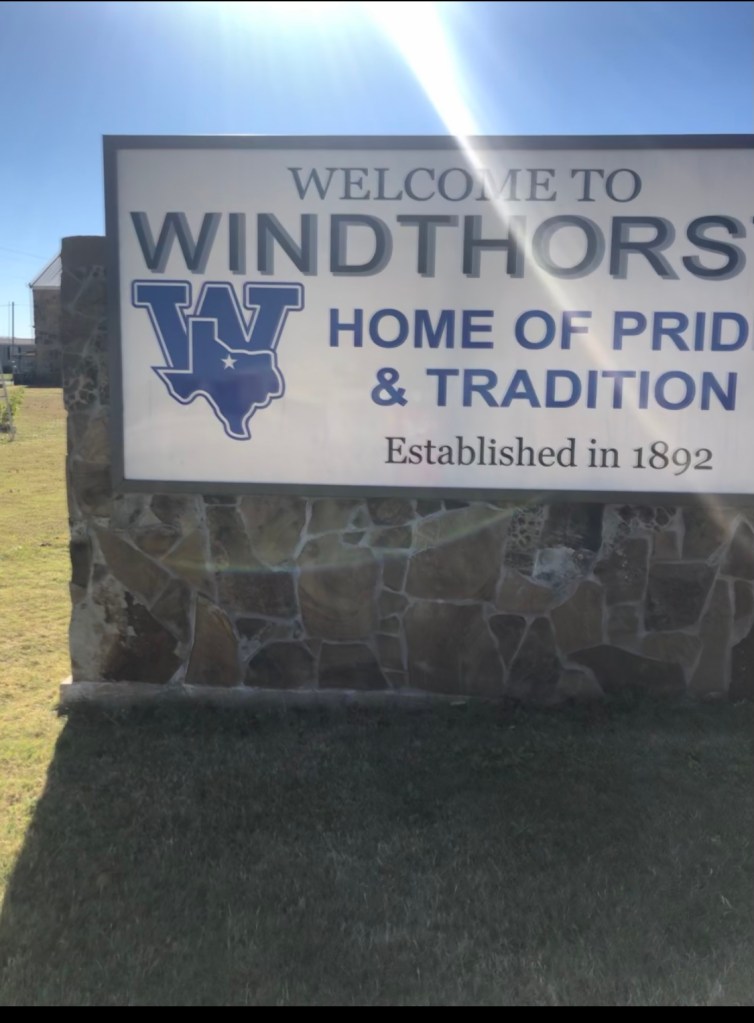
Windthorst a German settlement that bills itself as the home of pride and tradition sets an example for America with a signpost asking us, a divided country, to look forward and heal. In Archer city itself, people now pin their hopes in prayer as a pandemic ravages our land.

Windthorst an example to America

Hopes that these high school students’ action to be an aberration are high after young people all across America, last Summer raised their clenched fists in the streets, day in and day out, to fight racism and injustice.

After all, we are just people, so we will always reject race, the inappropriate and undesirable manner of judgment, causing discrimination and injustice. If you harbor the platitude that “white men can’t jump,” then here is Jeremy Wariner beating two black guys in a 400-meter race.

Clipping :Courtesy of The Dallas Morning News (Subscribe to the Dallas Morning News)

PS:

On my way back from Archer City, the third time in as many months before and after the election,
a State Trooper pulled me over for DWB (Driving While Black)

Deep Ellum Dallas

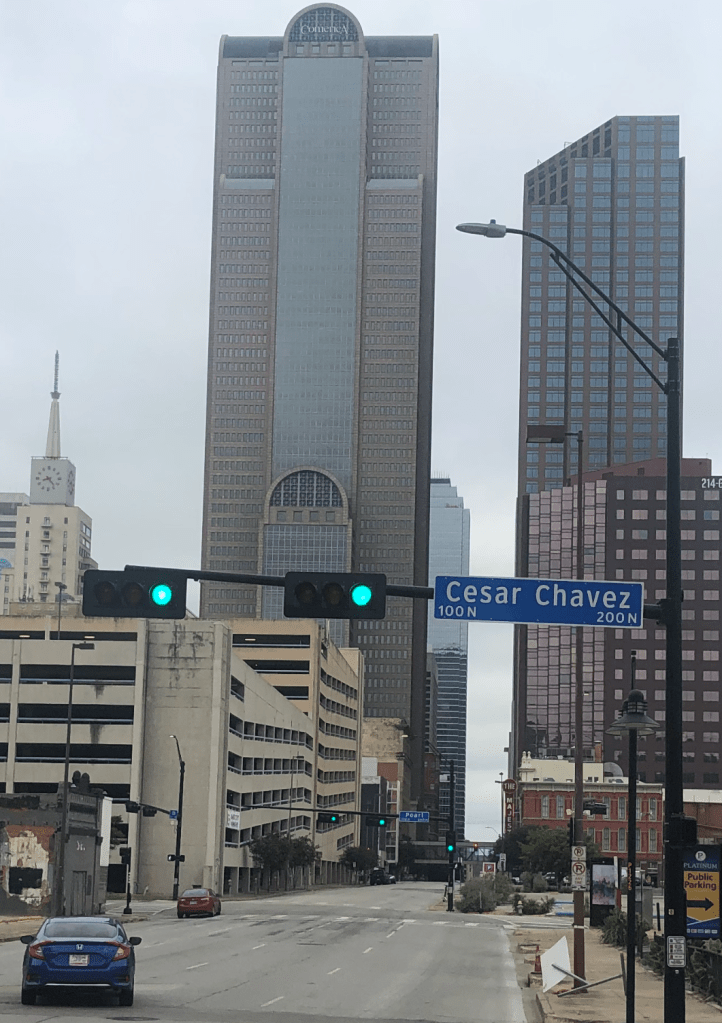
In Dallas, if you are looking for a watering hole with an extensive beer selection, including several drafts, follow the arrow that says Deep Ellum. Or search for the familiar name, Malcolm X Blvd. Not so familiar to many will be Cesar Chavez Blvd. Either way, these will get you to a conglomeration of activities bustling with nightlife, hotspots for live music, cool bars, and casual eateries.


Get there early, say before 8 p.m. Otherwise, parking spots will be absent though the streets are pedestrian-friendly these days, with increased police presence, making foot traffic exciting.


Main, Elm and Commerce streets run parallel downtown Dallas into Deep Ellum Dallas, the Mecca for the arts. Radiator Alley carves a path to any of the roads to bring you to the vibrancy of Dallas’ cultures, art, and music.

A homeless man snores at the closed alley pathway

Expect to hear blaring bass as you walk the streets. Enter any of the clubs, and you will see bodies tangled together on the dance floor and packed with people like sardines. You might even sometimes press and rub against sweaty bodies as you make your way to the bartender.

Outside, there are patios and rooftop bars if you prefer to air out and chill to some soft music, reflect on the calm and beauty of Dallas’ skyline, with some appeal of bold colors provided by plenty of murals on the sides of buildings by artists for added ambiance.


That was before Covid-19.

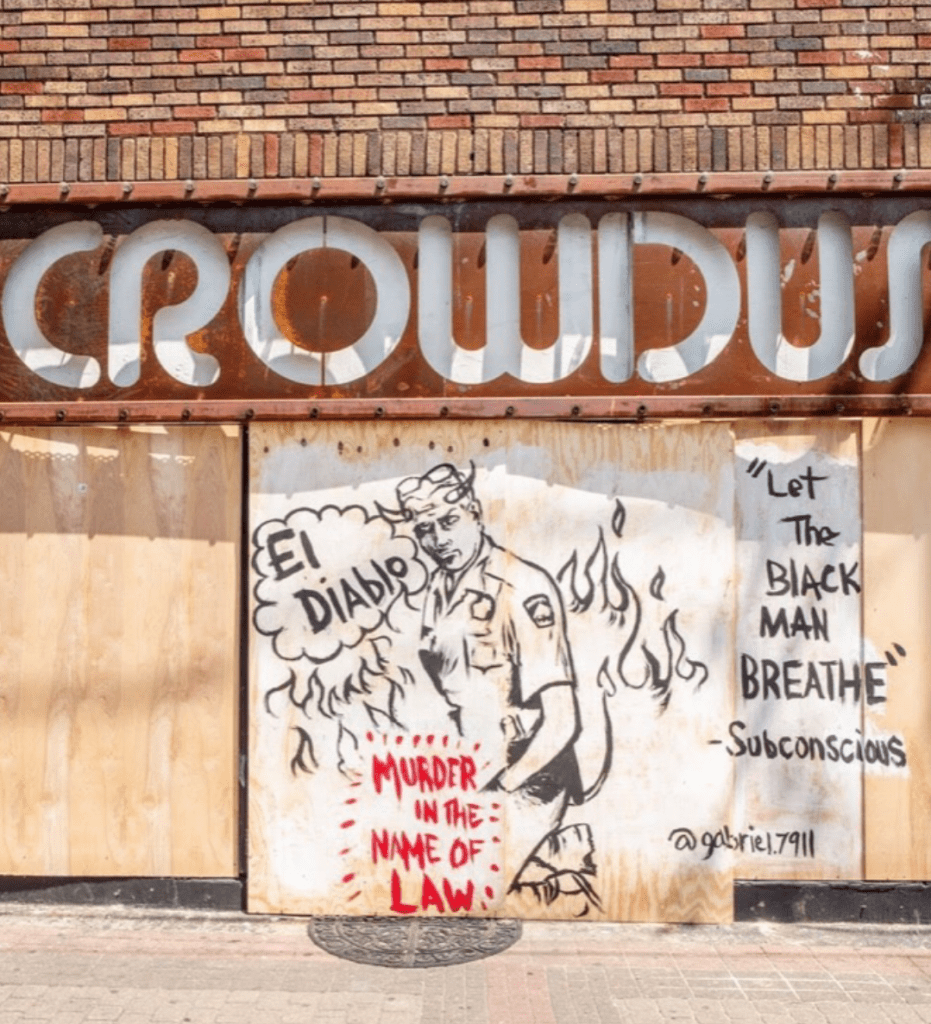
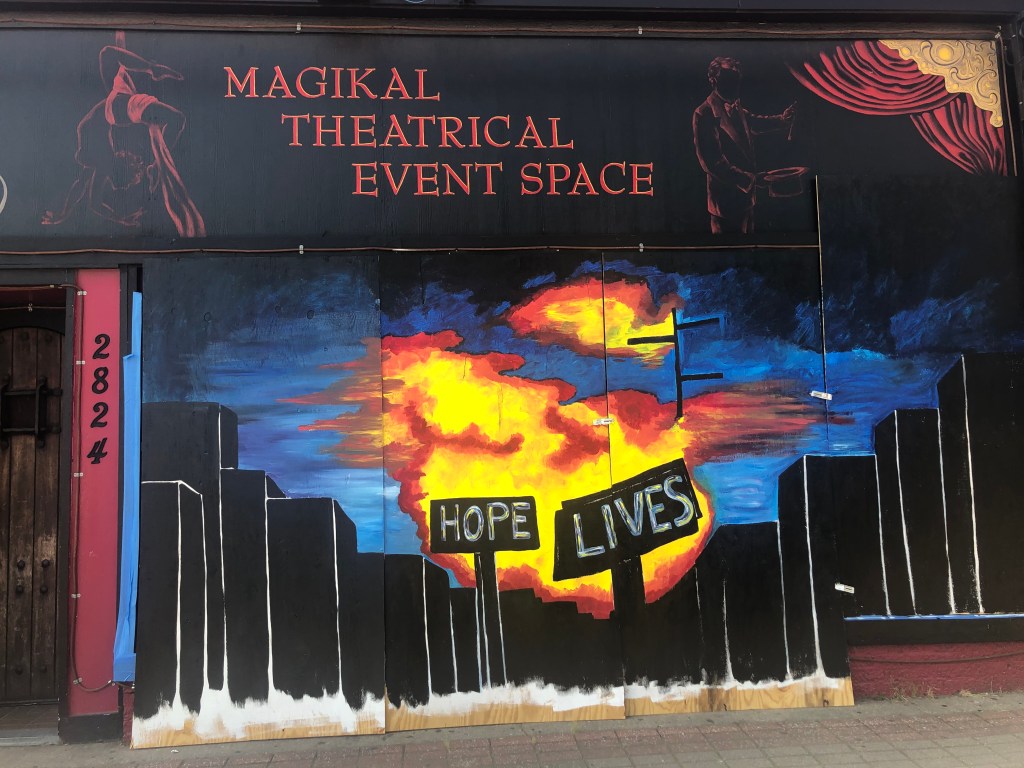
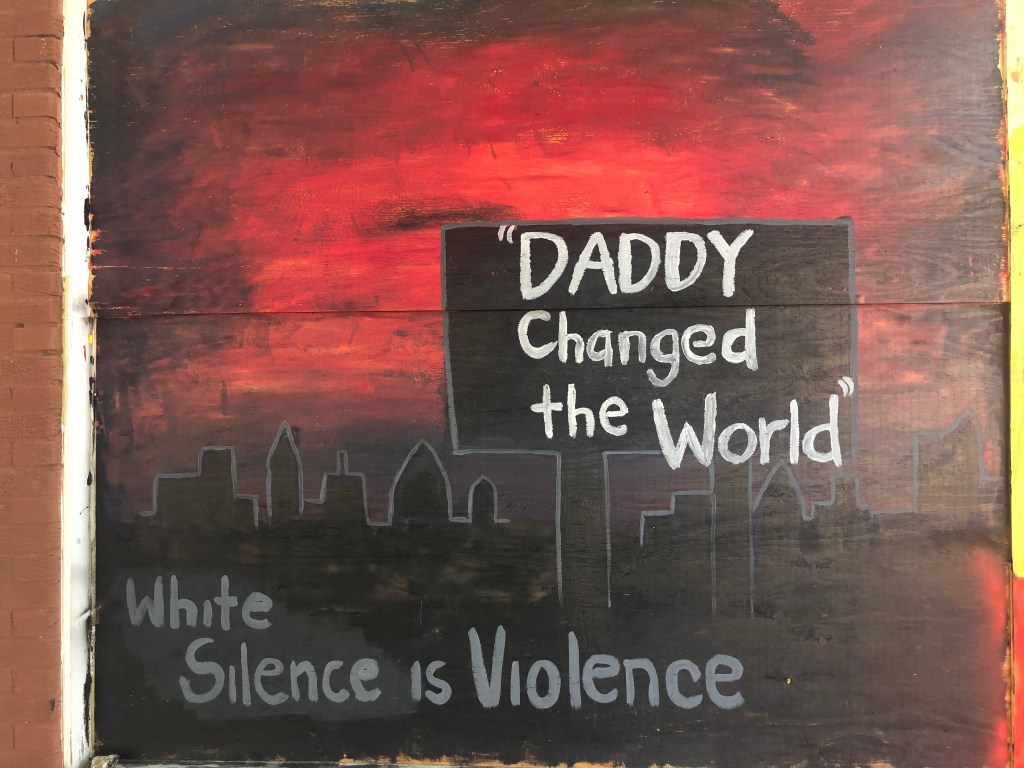
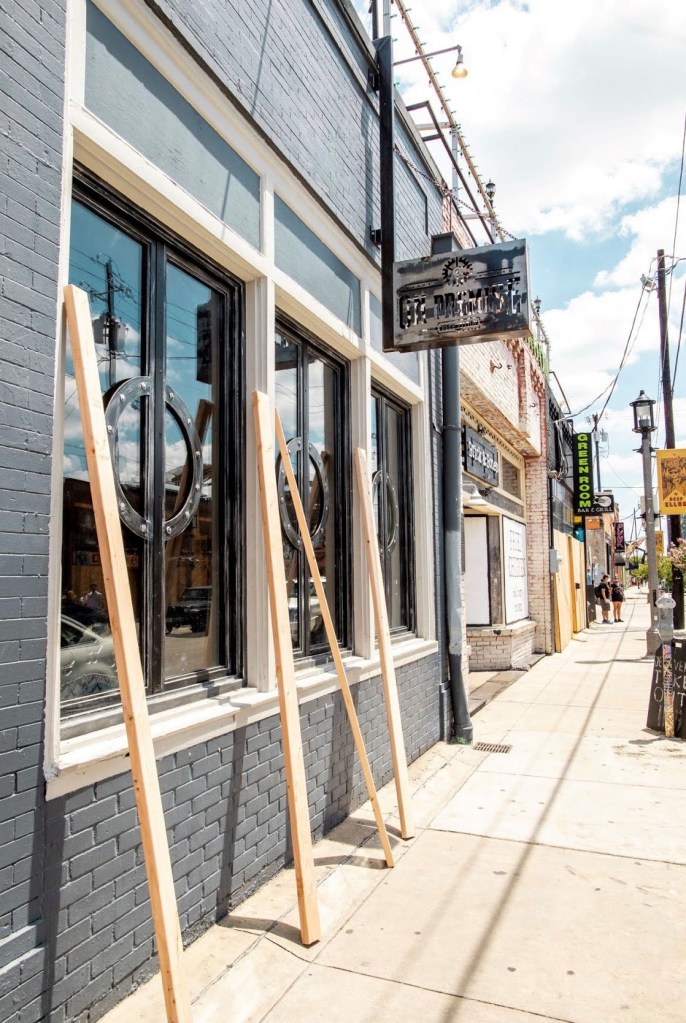
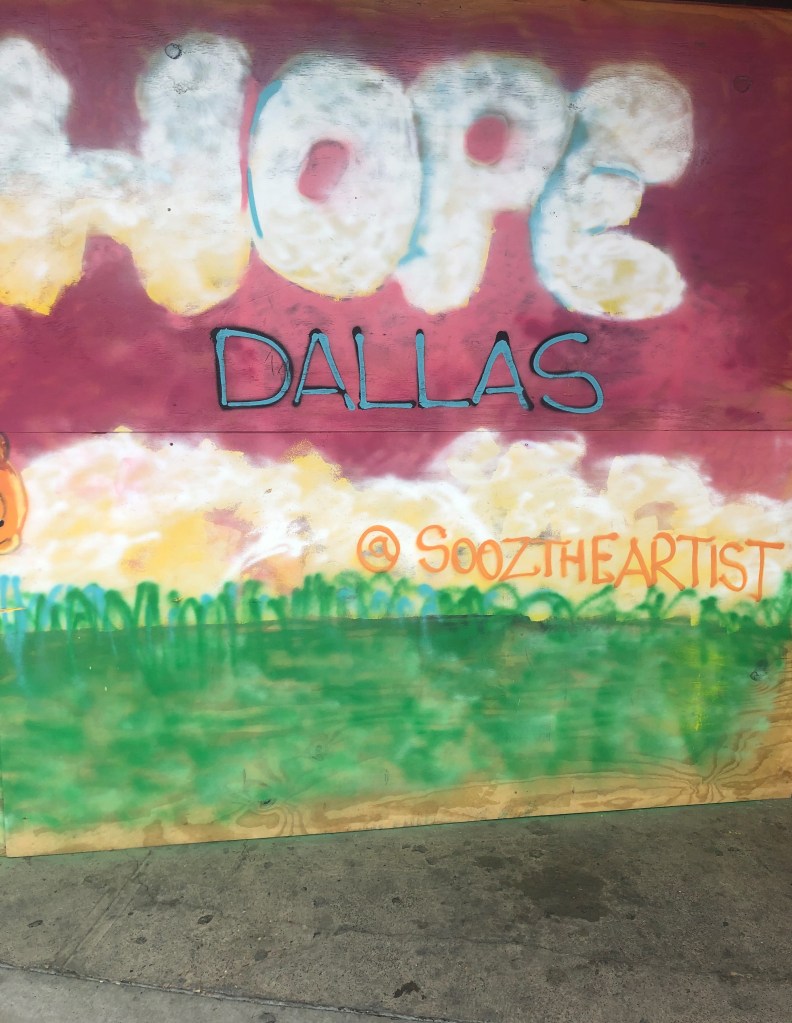
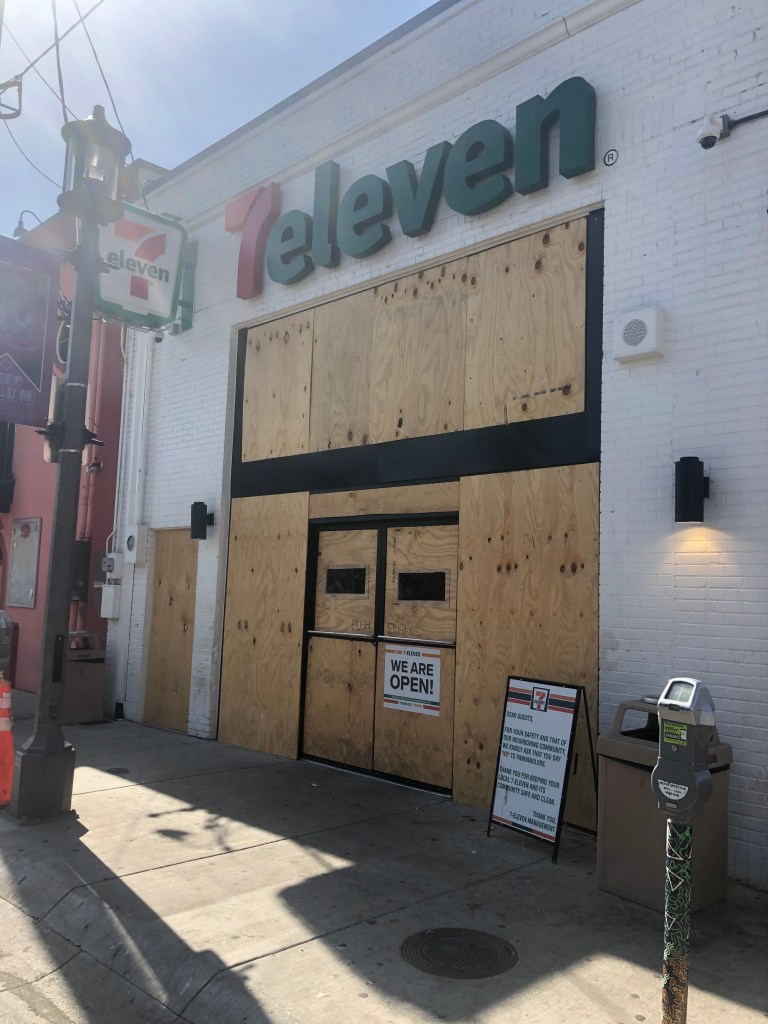
Now, the buzzword is masking, and in Deep Ellum, that’s not just for people, but businesses are mostly masked with boards to prevent rioters from glass-breaking.

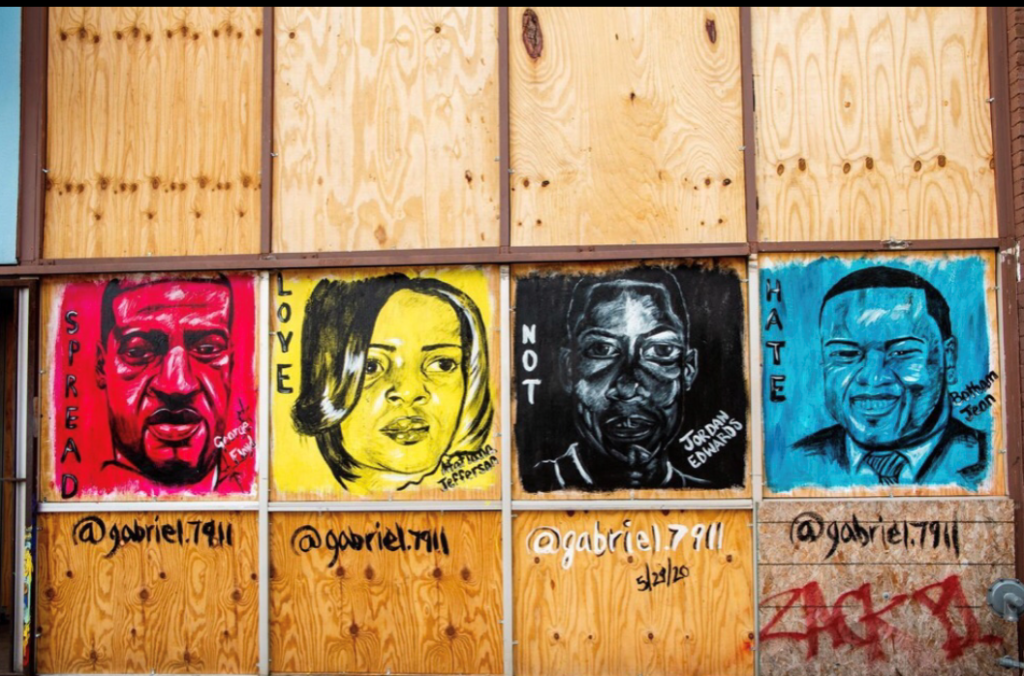
As managers, waiters, bartenders, and musicians work no more, artists went to work on the boarded-up buildings with murals.
Not to overwork the adage, “a picture paints a thousand words,”
put your hands together for Deep Ellum Dallas today!

Don’t be silenced, speak up.
Lady Liberty weeps
Can you name these four killed by the police? Yes, you can.
Three Links
CoLab along with Friday’s Foolery take the stage @ Three Links on Tuesdays. See photo page for Friday’s Foolery
Kwinton, Kierra & Kevin Gray @ the Brewery Company’s patio – Deep Ellum
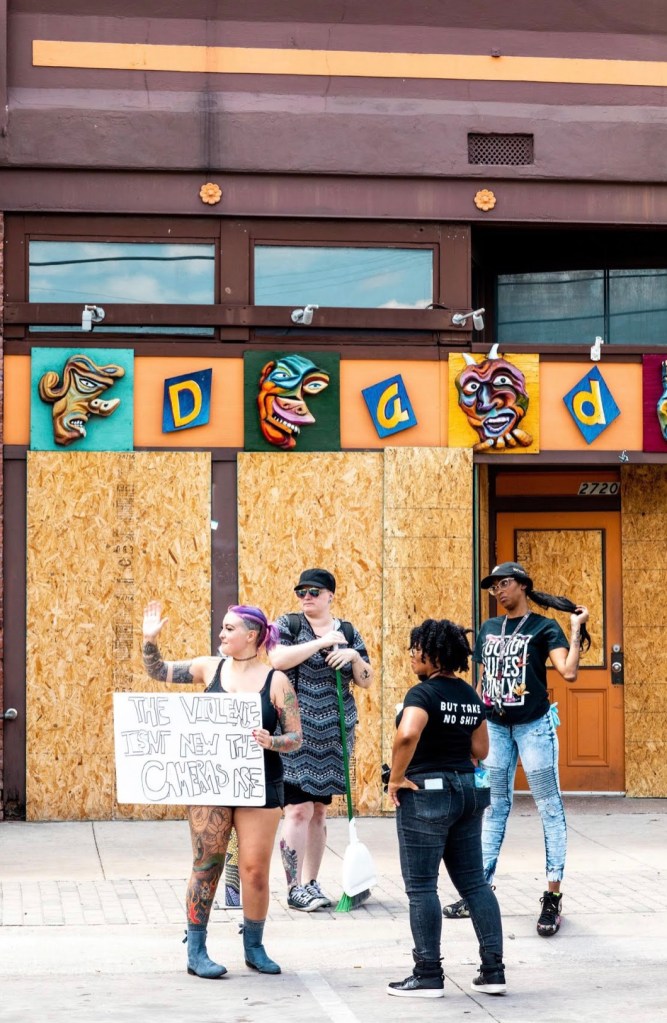
Club Dada, all boarded up (Perhaps the oldest in Deep Ellum) “The violence isn’t new. The cameras are”

Boarding in progress
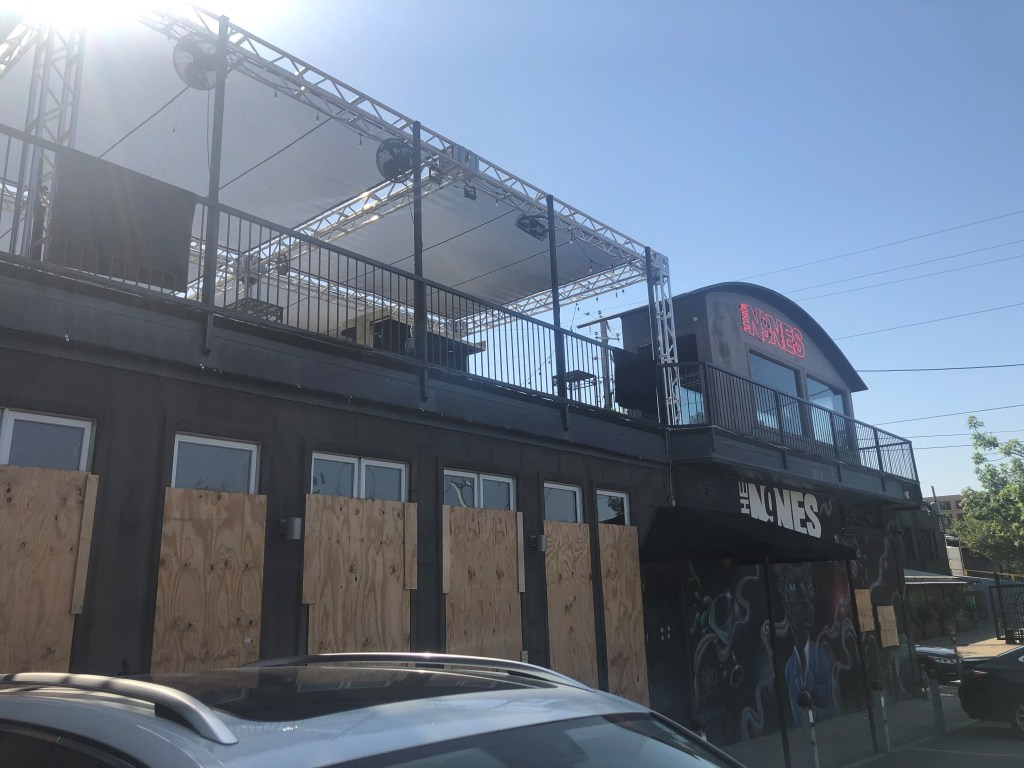
The Nines, rooftop bar, boarded up
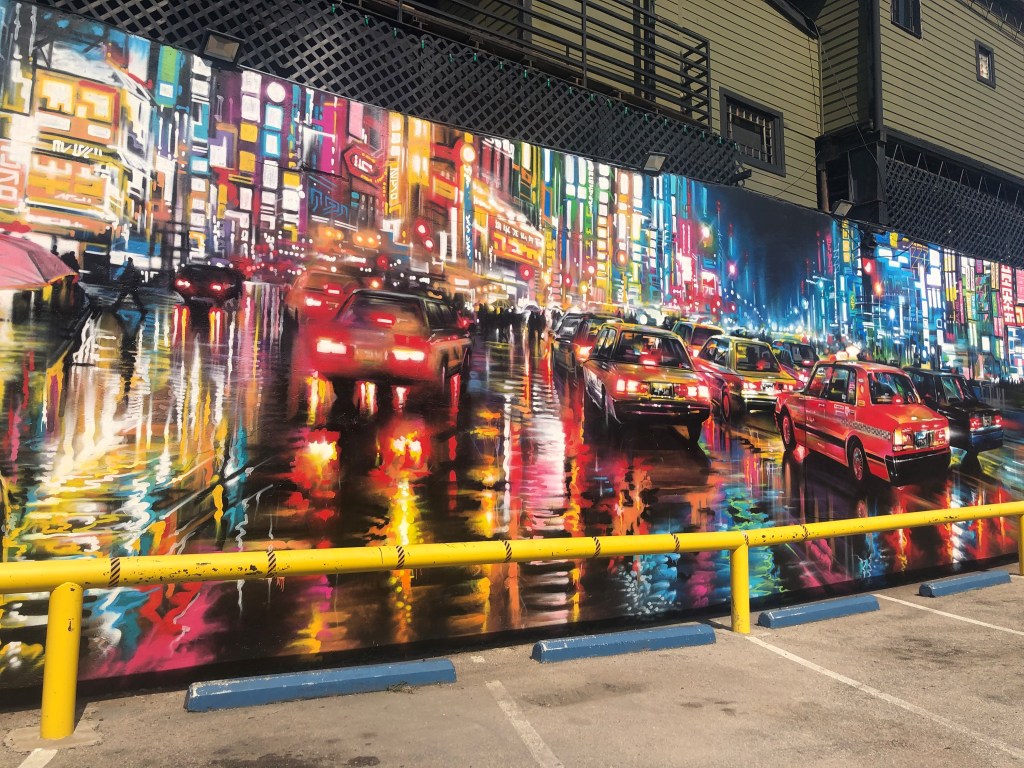
How long did it take to paint this? Zoom out.
“No woman no cry” – Bob Marley
The police, close to shutdown (Deep Ellum)
The police send everyone home at 2 a.m. (Deep Ellum)
If you like a quieter rooftop bar with no live music, Tacos & Tequila, Uptown, will do.
The Bar – Tacos & Tequila

PS:Please read about Cesar Chavez.

They never close come what may, do they? (Deep Ellum)

The Routledge Companion to Media and Humanitarian Action

A book Review

We live in a time replete with unprecedented human sufferings. To not have had None Government Organizations (NGOs), relief organizations such as the Red Cross or other representatives of global disasters is impossible to fathom. 

The Routledge Companion to Media and Humanitarian Action approaches the relationship between the media and challenges humanitarian organizations face in our time, in-depth.

Contributors include media professionals and experts from around the world, experienced in delivering humanitarian aid supply. They provide enough fodder to feed the hungry mind, longing for enough context and background knowledge of aid workers.

It tells using case studies and content analysis, challenges faced by representatives of humanitarian emergencies. There are negative consequences of humanitarian intervention, it shows. 

How strategic communications are designed and implemented in the field of humanitarian action are exhausted.

“An excellent book – well documented,” exclaimed a reviewer who believes the authors’ arguments bolstered by other writers have exposed the corrupt, hypocritical, self-serving aid industry and cynical collaboration with Kleptocrats and dictators of the world’s vampire states. 

Another reviewer called it “a great book from authors who have hands-on experience in humanitarian aid.”

Delivering humanitarian aid is a dangerous enterprise as it involves working with corrupt governments and rebels sometimes. “It is hard to avoid working with people who have blood on their hands even if the effort is to help innocent victims,” the reviewer wrote.

The authors state that “crisis communication is now intimately connected to the international humanitarian community – global public first responders and all who sustained humanitarian assistance during complex emergencies and their aftermath.”

They tell of how ” as the ground seems to shift beneath the people and communities affected by disasters – either human, natural, environmental or conflict generated – a newly emergent 24/7 media landscape reports, disseminates and ultimately reports new human suffering worldwide.”

Without question, since the end of the second world war, response to global crises have been swift as the intensity has magnified. These and more show the unprecedented nature of the exercise undertaken by the international aid workers who have erased all geographical boundaries during complex emergencies and their aftermath.

Anderson PhD., is professor and director of graduate studies in the department of communications and media studies at Fordham University. She also directs the peace and justice program.

De Silva is the director at the Institute of strategic studies and democracy, Malta. He was previously the senior adviser at one of the United Nations’ global divisions.

This text was a whopping $240 but could be yours now for $55. It has a considerable number of contributors, each with appropriate academic and professional qualifications. Little wonder the authors, if editors ensured that each has a write up at the end. They are referred to as contributors.

The introduction which is one of the few sections written by the authors narrates the power of the media in times of humanitarian crisis punctuating it with global challenges, constraints and consequences.

The price of the book was steep when I first read it. I recommend it to anyone who has a heart and has intentions of getting involved in helping solve the world’s calamities or merely cares enough to know what it takes to engage in the exercise of providing disaster relief.

The Fear is Real

In August of 2017, my curiosity got the best part of me after Texas Senate Bill 4 (or Texas SB 4), a bill that effectively bans sanctuary cities in Texas. Filed on November 15, 2016, and discussed during the regular session of the eighty-fifth Texas Legislature, Governor Greg Abbott signed it into law on May 7, 2017.

Upon appeal, the 5th circuit court of appeals unblocked most of the law, allowing SB 4 to go into effect.

The sun had peeked out of the horizon long enough to have its brilliant rays beat down on my car with precision reliable to put my air conditioner on full blast on my way to a church, off Kings Row in Denton, Texas.

The temperature was north of 100 degrees Fahrenheit, and the thermometer in the car clocked it to be 102, that Sunday afternoon.

It was 2 p.m., the doors to the church had opened for the 2.30 p.m. service. The congregation, predominantly Spanish speaking, started trickling in a space that could hold a little over 200 worshipers.

Earlier, there was a service at the same location for a different denomination.

Mission Templo Bethel AD headed by Sofia Piaz shares the facility. I secured a seat next to Armando, who, without asking, kept me abreast of the service with his translation in English. “I do not speak English well, but I will try my best to explain what is said to you,” he assured me.

With efforts by the Trump administration beefed up to enforce immigration laws to rid the country of undocumented immigrants, Texas passed SB 4 banning Sanctuary cities.

The law asks that other law enforcement authorities check persons they encounter deemed foreign to verify their immigration status. If there was any apprehension about my conspicuous presence, it was not out of place but well-founded.

Armando had to ease himself, so he headed to the restroom. Sofia, the pastor, occupied the spot he vacated and continued interpreting the sermon. I then asked her what she felt about the new immigration enforcement.

“We have been passing on the necessary information to help our group. I had the chief of Denton police come here one afternoon to talk to my team. The enforcement does not start till September,” she said.

“The chief promised to enforce the law, but his officers will not be out there chasing or profiling just anyone,” she went on.

It is now illegal for any city or organization such as churches, traditional places known to the public for rendering help to immigrants, to harbor anyone without proper residential papers. The law requires local governing bodies, sheriffs, and campus police to help identify undocumented immigrants.

Children as young as 12 are sometimes afraid to leave home for school for fear that upon their return, one or both of their parents would have been apprehended by immigration authorities. Door knocks are unanswered while curtains and blinds are all pulled down in some homes.

There was no cause for optimism as the church was half empty, perhaps a testament to the fact that those without the required identification dare not venture outside of their homes even to go to church.

Walking out of courtrooms in other cities, immigration and custom enforcement officials have emerged from hallway benches, rushed towards suspects and effected arrests.

Could this be the reason why Sofia’s church was not at its capacity that afternoon? I put this question to her, to which she said, she is doing her best to make sure her congregation understands the law.

Denton is about three dozen miles from Dallas, but like many others, because Texas shares a border with Mexico, Hispanics form about 19 percent of its population.

The service was excellent with mostly singing, accompanied by a band, interrupted when it was time for the guest pastor from Florida, the reverend Ector Cortez, to preach. The sermon was on how Moses led the exodus of the Israelites out of Egypt, across the Red Sea.

Most police departments across the country have expressed the need to stay away from immigration law enforcement not to ruin any trust between the community and them in their bid to investigate and solve crimes.

PS: https://www.tabletmag.com/sections/news/articles/america-nation-of-immigrants


Did I get more than I bargained for?

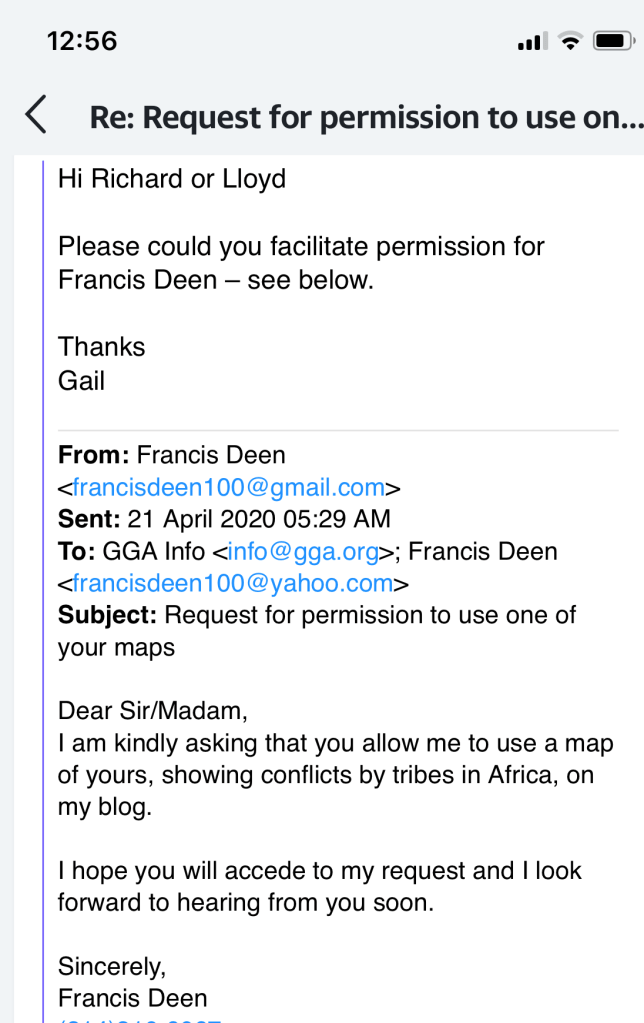
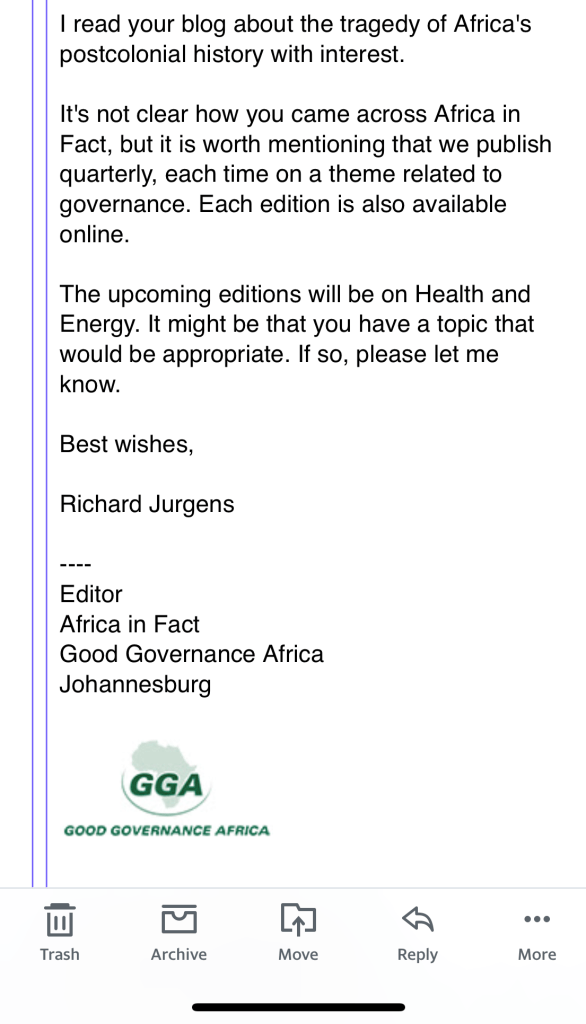
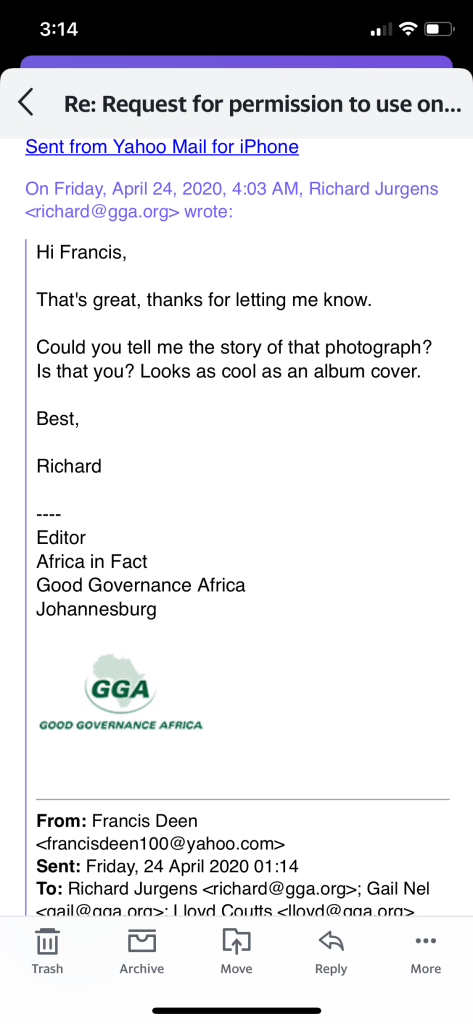
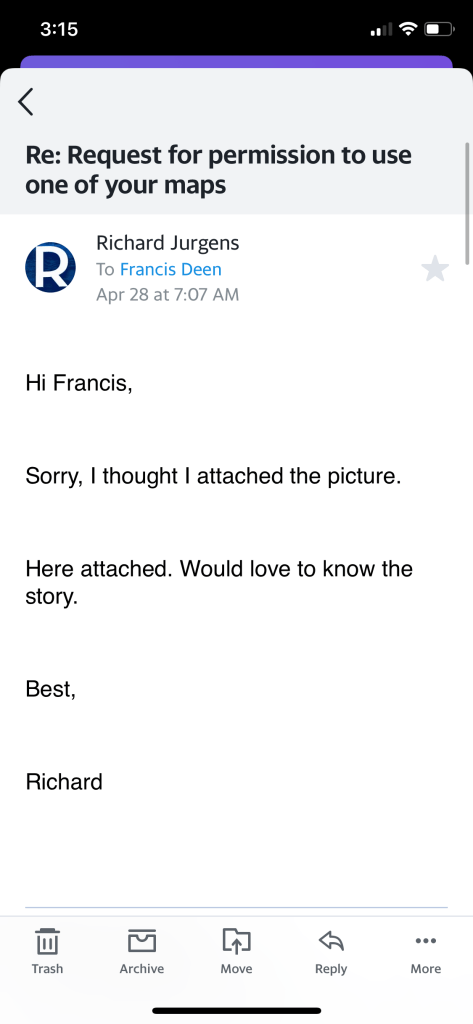
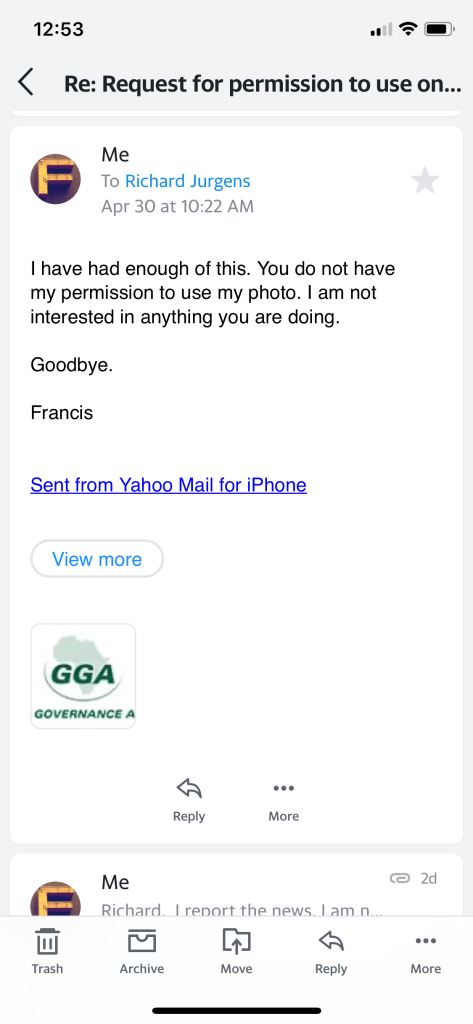
I sought permission to cite a map in my previous post and here is how it went:

PS: Please read Negritude, Leopold Sedar Senghor’s poem, “the sum of the cultural values of the black world as they are expressed in the life, the institutions and the works of black men.” Senghor, one of our scholars ( a poet), was president of Senegal from 1960 to 1980.

How could he not have known that was me in the photo? You see why I lost my cool?

Wish you were here!,” reminds me of Pink Floyd,the progressive British Rock Band. Their album I love best is “The Wall.” It was banned in South Africa in the days of Apartheid.

Has the tragedy of Africa been allowed to perpetuate?

More than 20 years of writing about and photographing Africa has left me with indelible impressions, and while polemics sit uneasily with potted histories, a few facts here might be helpful. It is indisputable that, since the late 1950s, no continent has seen more conflict and instability. The phenomenon is often blamed on a combination of the European slave trade and colonialism.

While there is some merit to the argument, it ignores at least four millennia of conquest and enslavement by internal forces, from the ancient Egyptians to the Zulus. Also rarely mentioned are the Arabs, who, beginning in the 7th century A.D. and for the next 800 years, controlled the market in human beings from Zanzibar to Mali. Even today, the Arabic slang for a black person remains abd – slave – and well-documented raids against the southern Sudanese Dinka and Nuer tribes continued into the 21st century.


By contrast, Europeans were relatively late arrivals. Although the Portuguese had established a presence as early as 1482, followed by the Dutch 170 years later, it wasn’t until 1885, decades after they had outlawed slavery, that France, Britain, Belgium, Italy, and Germany moved inland from coastal settlements to claim the rest of Africa.

Prompted as much by national prestige as the scramble for natural resources, the process was not gentle. Armed rebellion was ruthlessly put down, as was centuries-old inter-tribal warfare that threatened to disrupt the flow of raw materials. The British and French adopted systems of indirect rule, giving power to traditional chiefs whose loyalty to their colonial rulers was rewarded with honors, decorations, and even knighthoods. Overall and contrary to popular perception, the period between the 1880s and 1960s may have been the most peaceful in Africa’s history.

The first half of the 20th century saw bright students, often the sons of chiefs, educated in the church- or state-sponsored schools. Many went on to take degrees abroad, where the lure of Marxism was irresistible and gave rise to dozens of tribally-based liberation movements supported by China or the Soviet Union. However feted the elite were by East or West, the vast majority of Africans continued to live in pre-colonial iron-age cultures defined by tribal allegiance and extreme brutality. It was fertile ground for what was to come.


Following WWII, demands for independence gathered voice, the ‘winds of change’ became a storm, and by 1975 no African country was ruled from Europe. Elections were held, presidents installed and the West congratulated itself for the peaceful transition to democracy. The satisfaction was premature. With rare exceptions, the former colonies became paradigms of cruelty unknown in the previous 100 years.

Most were marked by a succession of coups d’etat that exchanged one tyrant for another, whose belief in ‘African socialism’ saw infrastructure collapse and previously self-sufficient net exporters turned into economic failures.


Representative examples include the Central African Republic, where Jean-Bédel Bokassa, wearing a $5m diamond crown while his people starved, declared himself ‘Emperor’ and made it a crime to utter the words ‘democracy’ and ‘elections’. Tens of thousands were murdered and Bokassa personally took part in beating to death scores of children who protested over the cost of mandatory school uniforms.

A follower of ritual cannibalism, he was said to keep heads in his freezer because he liked the taste of human brains. In Uganda, Idi Amin Dada and Milton Obote, one overthrowing the other, declared themselves presidents for life and murdered between 300,000 and 500,000 of their people. President Ahmed Sékou Touré of newly-independent
Guinea aligned himself with Moscow banned further elections and established concentration camps, where at least 50,000 political opponents were killed.


After declaring independence from Britain in 1965, the predominantly white-ruled Rhodesia was subject to international sanctions that eventually led to majority rule. In the newly-named Zimbabwe, President Robert Mugabe imprisoned thousands and used his North Korean-trained 5th Brigade to slaughter at least 20,000 tribal enemies. As de facto president for life, he confiscated white-owned farms that had been the backbone of the economy and built multi-million-dollar residences as his people struggled to feed themselves. A country once described as the breadbasket of Africa is today dependent on foreign aid.


No more horrific example exists than Ethiopia – ironically the only country never colonized – where, supported by the Soviet Union and Cuba, Mengistu Haile Meriam’s ‘Red Terror’ killed at least a million people between 1977 and 1991. Human Rights Watch called it ‘one of the most systematic uses of mass murder by a state ever witnessed in Africa.’ Yet Western media ignored the root causes – Stalinist collectivization, forced population displacement, and mass executions – focusing instead on drought and famine, while a complicit United Nations delivered millions of tons of food and said nothing as it was confiscated to feed an army responsible for the genocide.


These are not unique examples. What they and at least a score of other tyrannical regimes had in common was a UN that rewarded their crimes with billions of dollars in aid, most of which went into the pockets of transparently corrupt governments, and an international media unwilling to report the truth.


By the perverse logic of the time, the industrial-scale murder of black Africans by black Africans was a ‘cultural issue’ that only the perpetrators were qualified to judge. The political disenfranchisement of black Africans by white Africans, however, was a crime against humanity. Thus was the spleen of the international community, who were complicit in the deaths of millions, eventually focused on South Africa, which has since joined the rest of the continent as a symbol of corruption and indifference to the needs of its people.
As Winston Churchill observed, ‘Men occasionally stumble over the truth, but most of them pick themselves up and hurry off as if nothing ever happened.’

Thus, has the tragedy of Africa been allowed to perpetuate?

PS: This contribution by extreme right-wing author and photojournalist Jim Hooper was received in 2017. I have not been able to reach him since then. I requested a meeting in January of 2019, while in London for my mom’s funeral, but it never materialized. The map, courtesy of GGA(Good Governance Africa), shows conflicts by tribes in Africa.

Map Credit: Peter S. Larsen blog. http:peterslarsen.com/2011/01/19african-conflict-and-ethnic-distribution/

The comments are integral to this report.

THE OLD BROOM

The following commentary was in response to Sierra Leone’s trade minister Mr. G.B. Kawusu Konteh, who urged trade inspectors to enforce the law to combat the escalation of prices of essential commodities such as rice and petrol. Wednesday, May 22, 1985 ( The Globe newspaper, Sierra Leone)

It would appear that trade inspectors have outlived their usefulness in Sierra Leone, judging by their ineffectiveness. If they were not working within a system in which nobody is in charge, they would have been declared redundant several years ago.


Their retention in the face of non-profitability adds one more bleak chapter to a discredited regime.


The role of trade inspectors is arguably to seek the interests of the masses vis-a-vis the petty and big-time traders who are by and large the exploiting classes. The decision by the ministry of trade and industry to once more issue public notices stipulating prices of fuel, rice, and other commodities reproduced elsewhere in this issue is most welcome.

The government has designated certain goods as essential commodities which in essence are vital to the survival of the people. It is public knowledge, however, that the trade inspector, from a position of financial weakness, is forever bought over by the trader whose activities are inspected.

It is rather too late in the day for Mr. Kawusu Konteh, who has held his present ministerial post for over one year, to rail at his men for failing to enforce the law. The statements of the minister in this regard could only be taken with the insincerity they deserve.

Hypocrisy by our leaders has become an entrenched institution in this unfortunate land and neither Mr. Kawusu Konteh nor his so-called inspectors of nonentity could alter its size or burgeoning scope.

The people have to reckon with the real facts of life that only by banding together and acting as one in their respective areas under the leadership of genuine parliamentarians or other local heads, could they stem the tide of our inhuman inflation.

Under the present fortuitous circumstances in which our trade inspectors find themselves, they can only show a change of attitude for the worse.

Mr. Kawusu Konteh’s broom is too old to sweep clean.

The Power of Words. At The Tablet Newspaper, the words encapsulating our belief were:

The use of words is our choice of arms.