RETIRED? NOT QUITE

He exits his house into the garage. Clamps adorn the walls. “You can never have too many clamps; A lot of clamps. Some woodwork shops will have a wall of clamps, all types, and sizes.” This is where the magic happens!

Steve Petermann knows his tools. He worked for engineering companies for about 40 years, retiring at 62, the earliest age he was eligible for benefits. Now 66, he spends days in his garage turned woodwork shop.

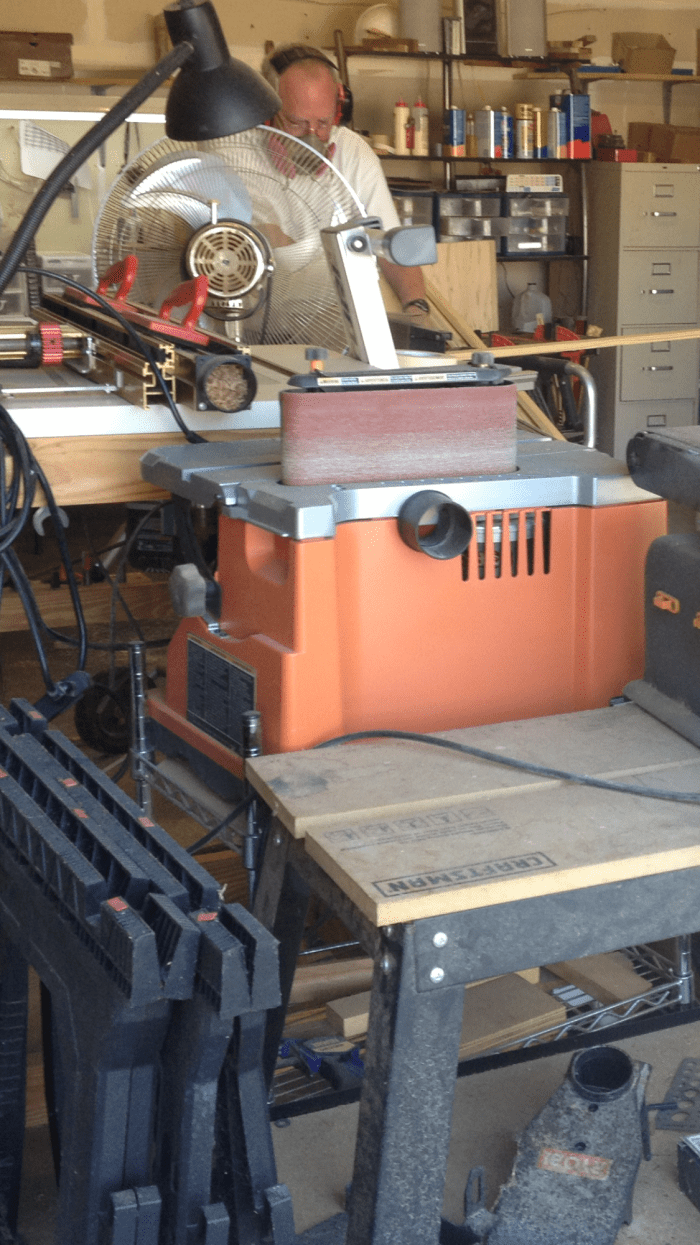
There is no scarcity of cutting tools in the shop. The drill press with a vice that holds workpieces together is perched next to a router table, used to round off and make holes in wood, not far from the spindle sander and two saws, all electrical. Sawdust covers most of the floor, and the whiff from stains occasionally compromise the air quality. A movable rotating fan blows the still air to offset the smell.
IMG_4829.PNG
Steve Petermann

This two-car garage opens up in the front of his house. It not only provides proper ventilation but affords much needed natural light, depending on the season. Some overhead lighting sheds additional illumination on the ample workspace. In the event of an imminent storm, his woodwork tools on wheels, are easily rolled to the side to make space for his van, parked in the driveway, used to transport materials for his newly-found vocation.

His smooth hands, spared from any cuts from the saw are scar-free. His dad, an experienced woodworker, one time, split his finger by half an inch. Blades now have sensors, saw stops they are called. Rule of thumb, his thumb still intact, never put your hand close to a cutting edge.

Growing up, there were no jokes in his home. Later, he found out his dad had a great sense of humor, but because his mom would not stand being teased, that part of their life was money under the mattress, hidden.

Today, Petermann spends three hours a day making Native American flutes.  He was already making bows, Archery Bows, when a girlfriend started flute lessons, so he too bought a flute and began playing. On occasion, he is on staycation- rides his bicycle, plays tennis, goes fishing or golfing.

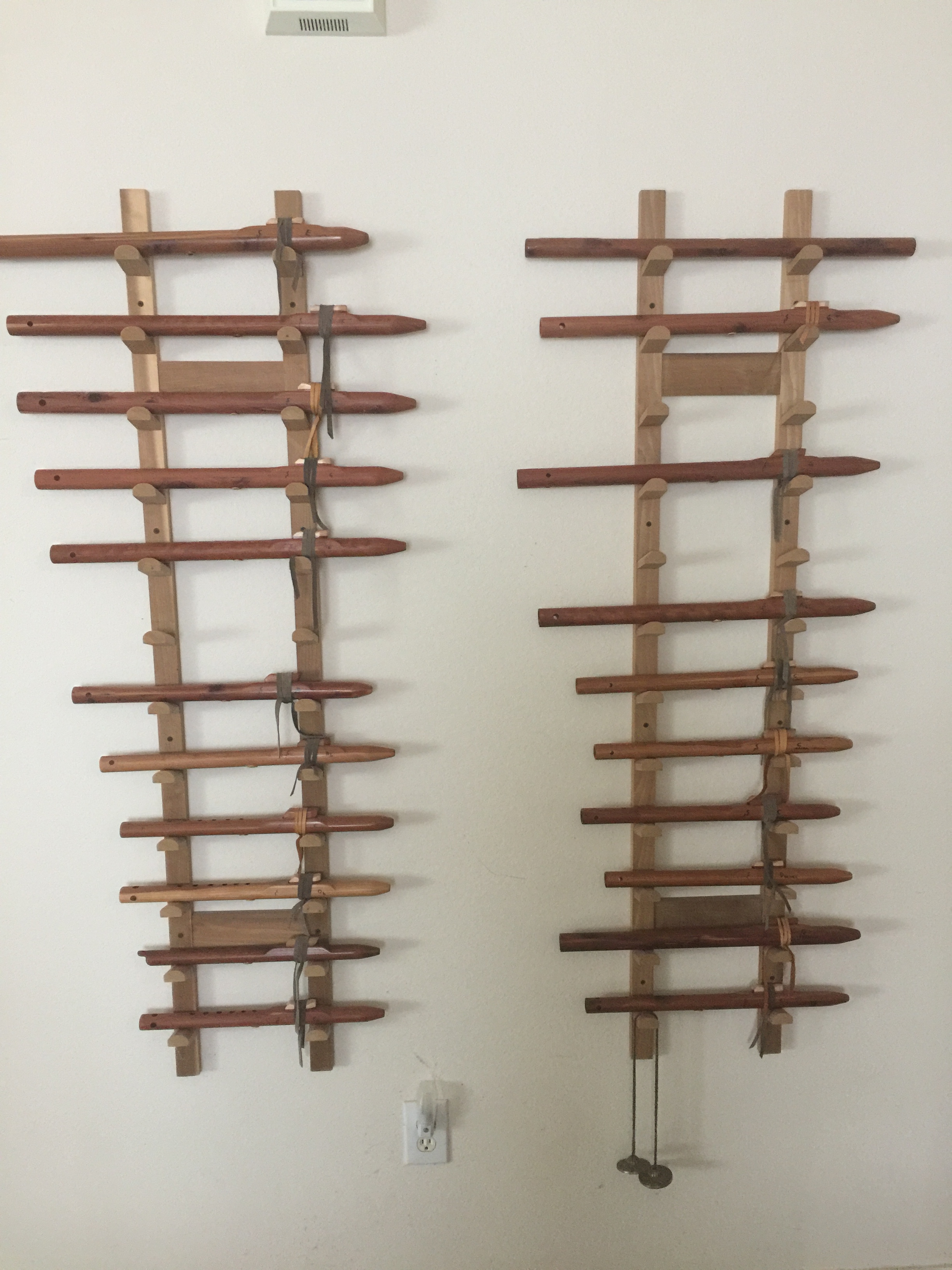
Flutes are very expensive. At least, the type he plays can set you back $250, so he bought the equipment to make them himself. He hands me one he made two weeks earlier to see. It is slender, feels sturdy and is well-polished.
IMG_4837.JPG
Flutes built by Steve Petermann

                   Cornell Kinderknecht playing Steve Petermann’s flutes.

He read everything he could about flutes. “So, I read everything I could,” he says, “everything,” he repeats, seated at his computer in the garage, arms folded across his chest, bending over closer as if to whisper in my ear.

Not having a teacher, the computer is his master. Having an engineering background comes in handy in making flutes as they must be designed right in the first place. Steve, an introvert by his admission, uses his time alone to make flutes. Over an extended period, his consistent execution of this practice helped the transition from an engineer to the art of flute making. One of his flutes played a solo in Carnegie Hall.

Engineering entails designs, as does flute making. Flute, a woodwind instrument is about physics. There is a waveform based on air pressure, frequency, and temperature. Every sound has a spectrum of frequencies in it. In the key of A, for example, the fundamental frequency oscillates at 400 cycles per second.

To begin, he picks a key, an A, enters the Router diameter and other dimensions for the sound hole and other configurations on a spreadsheet. The computer calculates the diameter of the flute, length, and thickness of the sound hole and bore depth.

He dons a mask, plugs his ears, grabs the uncut pieces of wood, cuts them and planes to size as accurately as he can. He makes them long enough for the correct key.

He then moves on to make channels in the wood. Using his design sheet, he selects the right router bit. With the router table set up, he cuts the channels in there, a semi-circle cut. This process is not rushed because wood particularly will chip.

He starts routing. As it gets close, he checks the wall thickness with a dial indicator to give the flute a consistent thickness. He cleans up the bores with sandpaper. Next, he mills the sound hole between the main bore and the slow air chamber.

Placing a piece a time at a 45-degree angle in a jig, a wooden frame he had put together for this purpose, he chisels to knock some unwanted pieces off, ending the roughing out process before smoothing everything out.

He finds the edges of the bores, marks them as a guide, lines them up, and then glues them together. But to get good adhesion, he roughens the fixed surfaces first.

Using tissue paper, he cleans the bored-out holes and the sides of any excess glue. “You want to put enough glue. If you overdo it, then you wipe some off. Just make sure you have enough coverage,” he says.

At this point, the shape is not round but square-looking. So he runs it through the joiner to get the desired shape. He then develops the body and the mouthpiece, using a round over router bit. “What I am trying to do is get a nice round shape here,” he says, sanding it down with the sander.

He makes the flute longer than it ends up being, so he would later cut the end to the desired length.   Now he readies it for tuning

With his iPhone tuner, he tunes the flute. Plays a song on the flute, blows into it, to see if it matches that on the iPhone. If it does not, he makes some adjustments on the holes till it does. If the pitch is sharp, he applies clear fingernail polish inside the hole.

Looking at the finished product, he makes a connection to his flute making process. Here he draws upon the lore of another musical instrument – the making of organ pipes.

“I also read about organ pipes because they are similar.”

Are all these fancy tools necessary to make a small flute? I wonder aloud. “You can make a whistle without power tools. The Native Americans did it using the end of the arrow to gouge a hole out. You know the Anasazi Indians out of New Mexico, they make rim-blown flutes, which are  hard to play.’

To demonstrate, he sips water from a cup sitting next to his keyboard, to moisten his lips for playing,  picks up an empty milk gallon, holds it to the edge of his lips and blows across it. It sounds like his flute.

His choice of wood is relatively soft. He mostly uses aromatic cedar. He brings the flute closer to my nose to get the smell of the wood.

“Cherry is also excellent. It is not toxic. Dust can be toxic. Almost any wood is toxic to some extent.” Well, he certainly knows which wood is toxic.

“Cocobolo is a real beautiful dense wood, but it will do a number on you. It can cause lung disease if you are not careful.”

Steve was married for 15 years, but they grew apart. He knew the marriage was over after they went for counseling and the priest asked that they be totally honest. His wife said she could not.

“I will marry again but here are the conditions,” Steve says. “She has to be single of course, wants to get married immediately, should have no relatives, should be terminally ill and must be rich.”

His dad, a fighter pilot, stationed in Italy, flew a dive bomber in 1942. He was a brave guy. “One time his plane got shot up in the air, so he returns to base, gets on another plane and takes off to catch up with the rest of his squad. He gets shot again, returns to base again and gets back up there to dogfight,” he remembers.

“Yeah, I miss my dad. It would be three years since he died.” He watched his mother and father die. “They laid there and died and in a matter of seconds, their skin color changed,“ he says. He confesses holding imaginary conversations with his dead dad thinking of things his dad used to do when he was alive.

When he is not making flutes, he fills the rest of his time learning Spanish. “You’ve got to do something with your day,” he says.

“When you are working, you do nine or ten hours a day if you consider driving to and from work. That’s 50 hours a week you got to fill in with something. You can’t play golf every day,” he says.

He learns 35 new words every week, hoping to know 2,500 words by year’s end. He then utters a sentence in Spanish, laughing as he speaks,“tu eres feo ,” he says, you are ugly.

Then he for the only time in our conversation asks me a question: “Why did you not ask me why am I so handsome?’ To which I replied, you are just as ugly as me.

PS: Steve Petermann is my neighbor and best friend. He has over a dozen patents in engineering still in use today.

The Dallas Morning News – The Future

On the corner of Young and Record streets in downtown Dallas sits a building with inscriptions on the front of it that partly read, “Build the news upon the rock of truth.” From a distance, it resembles what could have been written on the tombstone of a once-thriving newspaper that had been around for 175 years. Only that in this case, The Dallas Morning News is poised to spring into the future, looking ahead and not in its rear-view mirror.

Rock of Truth

Pretty soon this Southwestern Giant will have a new home downtown in a space for its digital leap.  ”Business is a very fluid thing. Whatever the business, it is going to change and the pace is quickening.” Robert W. Bradford and J. Peter Duncan with Brian Tracey, Strategic Simplified Planning. (2000)

The Dallas Morning News (TDMN) owes its longevity to its ability to obliterate competition as evident in the buying out of its main competitor, The Dallas Times Herald in 1991. However, as Harvard University professor Clayton Christensen made it clear many years ago in his book, The Innovator’s Dilemma, “disruptive innovation” has sent shockwaves through all businesses.

Managing Editor of TDMN, Robyn Tomlin acknowledges this fact. “We still have competition. It’s a different competition for people’s attention not only local but Netflix or Notify. We’ve moved to a digital subscription model. They read free, and we ask for a subscription. We compete for people’s time and extension to their loyalty, to be willing to pay for work that we do,” she said.

The paper had gone through an extended period of print but is now targeting a digital audience. The thinking is different. Presentation of its services is different as are the places it gets its money from. The business has a host of marketing companies such as data analytics, social media and search engines. It has a business that sells T-shirts and pens.

In its quest to diversify, it strives to create an ecosystem of marketing services with a whole host of different ways to go beyond print and digital. It helps people plan their events and buys advertising in a whole different market.

‘We used to be where we will print and then put what’s in print on the web. Now, everything is digital first before it goes into print. Sometimes, some news never goes into print, because they don’t fit that audience,” said Tomlin.

And that’s a challenge she understands as it is not easy to get people to change. The Morning News has reorganized its entire staff, placing half in different roles. A tremendous amount of training had been undertaken. Last year its staff took about 50 courses ranging from how to take videos to very complex exercises such as coding, data analytics, to social media skills.

unnamed (3)
UNT Journalism Professor Dr. Tracy Everbach reported for The Dallas Morning News for 12 years

The staff is also trained to use Facebook live in news situations to attract digital natives. In the end, the audience has grown. Some modernization has been employed. Reporters flag and do reviews within articles. If there is a conversation that’s going on, journalists will jump in and add more information. Increasingly, the comments happen on social sites. This paper now has an audience development team 24/7.

Its business model is digital, supported by advertising and subscription but the model for advertising is shaky, so it now seeks loyal readers that realize the value of its work. Though advertising remains part of its daily business, it is supplemental, not dominant and for Tomlin, that’s the challenge.

Digitally, it has 12 million subscribers, 40% of which are in Texas and the remaining 60%, all over the world. The latter does not have the affinity for Dallas because they may just care for that one article which is why the paper focuses more on the locals.

What are the threats? “They are huge,” states Tomlin, because the disruption is constantly changing the model. As soon as the paper thinks they are there, changes present themselves. The decline in print is faster than the other things they are doing so as the revenue from print is plummeting, that from digital is not going up fast enough for now, to make up the shortfall.

The newsroom had 600 reporters. Now, it is 250 and compared to others in Texas, that’s pretty damn good! The paper does not plan to make this number any lower so as not to compromise its quality of production.

Another threat is the rapid decline in its circulation, which has not been commensurate with the paper’s ability to adapt to the changes at this point but it hopes to get on an even keel shortly. It is counting on the fact that people need information to navigate their lives and to do so, they prefer to have a place where they can have credible information.

“No one else in Texas will be able to do what we are doing at the scale we are doing it. We still have the ability to sell the story in Texas,” said Tomlin.

unnamed
Robyn Tomlin VP/Managing Editor  The Dallas Morning News

Plans are afoot to reach new audiences – younger audiences and diverse populations. To this end, the paper runs Spanish Al Dia. There is a team that publishes this twice a week.

Today, the newsroom is about one-tenth of its budget for a paper that has an expenditure of $25 million a year. So there is a lot of digital business but most of them will not make $2 million a year and to sustain this kind of operation that costs money, someone has to pay in money.

Which is why it costs $10 a month for the digital subscription that is discounted to $100 a year and $300 a year for print because it costs more to print and distribute it.

Regarding content, TDMN publishes 200 stories a day digitally, a shift news organizations have been struggling with.

The paper brings in close to $260 million yearly, a profit lower than what used to obtain. Where and how it gets its revenue is certainly changing, but the news industry is far from dying.

Stories are told like never before, with videos, motion graphic and so on, whereas before, it was all words and photos. Breaking news happen, and within seconds, it’s out.

Referencing the tragic event that saw the killing of five of Dallas’ finest, “on July 7, we had three reporters literally running towards bullets. We were sending out text alerts and tweets. We can now tell stories so much faster, and that lights me on fire every morning coming to work with an incredible group of people,” said Tomlin, a Texas native- former vice president of digital and communications at Pew Research Center in Washington, D.C.

Comedy

To laugh often and much is good for your health. To be made to laugh the way comedians make us do when they present news of all kind in humor gives us another option in receiving the news.

For some, it is viewed as entertainment as they do not see how something so funny can be taken seriously. Or on the other hand, making fun of serious issues does not always sit well with some people.

Comedians do not seem to be bothered with the no-win situation and just push topics to the limit. Some even think they cross the limit sometimes.

They talk about race, gender or religious issues in a fun way. They have been able to make fun newsworthy, educational and entertaining all at once.

Comedy provides the avenue where conversations can be held that go beyond the traditional discourse that most often takes place behind closed doors. That the facts, said publicly, are in jest, make them less likely to offend than appease.

 Subjects and issues addressed are varied, very challenging and in most cases considered taboo.

But to comedians, everyone is fair game as they make light of anything and everything. If they are seen to be neutral, regardless of the subject discussed, they hardly sound distasteful.

Just the other day a guest at one of the shows stated she is color blind at which point the host wanted to know what happens when she stops at the traffic light.

I do not know what the host would have said had she replied that she does not drive. But to say you do not see color when there are different shades of people will cause disparities between races to be ignored.

“Colorblindness eliminates race as a viable explanation for social injustices.” Lind,( 2013)

Fake News

To say that the media is plagued with wide-ranging accusations is an understatement. The media gets a lot more credit than they deserve sometimes.

Media-driven myths and dubious or apocryphal tales connoting pseudo-reality, stories that often promote misleading interpretations of media power and influence have been exploited by questionable characters to spread fake news.

The media sometimes get it wrong, and the 2016 election is not an anomaly. But the media hardly propagate false news.

On the coverage of Katrina, a hurricane that made landfall causing tremendous destruction, much of what was reported came from the local administration, the mayor’s office and allegations of rape and mayhem are contentious to this day.

Some images of distressed citizens of New Orleans during the disaster were presented in a particular light, to portray one group of people struggling to survive as finding food, while others said to be breaking the law, were described as looters.

The Yahoo photo-report stirred a lot of controversy as to whether the two photos, one by an AP reporter and the other by AFP/Getty Images, feed the narrative that the media portray different races differently.

Say the name Iraq and all of a sudden, there is talk about how the war was sold to the public on factual errors and the press was more concerned about patriotism than presenting the facts.

The Iraq war started without exhausting United Nation inspections. It was as if Otto Von Bismark was relevant once more, rearing his head saying, “the great issues of the day will not be settled by means of speeches and majority decisions but by blood and iron,” A.J.P. Taylor. Bismark The Man and Stateman( 2005)

We went to war in Iraq and found no weapons of mass destruction as was told to the public. I have read reports that suggest back then, even The New York Times applied self-censorship during the Bay of Pigs invasion.

The media have to at all times tell the truth and the myth that they make the news is just not correct. They are only messengers that always want to get it right. Getting it wrong can have tremendous consequences.

So how do you tell the fake from real news? One has to be media literate. That is, the ability to separate the wheat from the chaff. To not understand the distinction reduces capacity to contribute to any debate.

Arguing over images and names

There have been many arguments about Native American mascots such as the Cleveland Indians’ Chief Wahoo saying it is all about race. Some have seen the continued use of Native American Indian symbols and nicknames in sports as an honor while others consider it an insult.

Cleveland OH
Cleveland Ohio, Steel Country.

There is little or no doubt that the use of Native American mascots by teams is intentionally meant to offend anyone. That has not stopped some from getting annoyed over the use.

This matter has been litigated in the past but remains unresolved. Lately, lawmakers have tried a different method by introducing legislation in Congress that would amend the Act of 1946 to ban the term from usage altogether. We wait to see how that goes.

The contention has been that term words such as the Redskins are contemptuous terms used to refer to Native Americans. Parallels of such terms have been made with the N- word. The N-word is one that has baffled me because I hear some black people use it as a term of endearment among each other but found not acceptable when another race uses it.

As in the case of the utilization of the Redskins, the use of the N-word has been the subject of debate and disgust and unsuccessful moves had been made to erase it from the general lexicon.

The N-word presents a bit of a dilemma because unlike the Redskins, the word is frequently used by blacks especially the younger generation. Many rap songs use it without any hesitation.

The irony of this accepted usage with some in the black community is that when songs are sold, they are not just bought by blacks. Whites, Hispanics, and Asians also buy them. Given that it is common to see or hear people sing along with songs they like, will a black person find it offensive if he hears a white person singing a song with the N-word in it?

What’s in a name ?

What’s in a name? People sometimes don’t take kindly when their names are misspelled or called incorrectly as if that affects or changes who they are.

It bothers me not if you call my name incorrectly as long as it was not done to alter it to give a bad connotation. A lot of names have meanings, and a lot of people take pride in their names or who they were named after.

That is when it deals with your individual name. In cases where the name attributed to you is one that reflects poorly on you such as being called a thug, a rapist or an illegal immigrant, then such framing takes up an importance of a different nature.

In the context of immigration which is among one of the hot topics of the day, to refer to anyone as an illegal immigrant is considered inappropriate since people are not illegal. Undocumented immigrants seem more like a better representation of who people are living here without permission or right.

 “The word we use to describe someone or something frame the situation in a positive, negative or neutral light and say as much about us as they do about the person being described.” (Lind 2013)

The media have framed the immigration story in various respects. There is the population which deals with the number of people who presently live in the country. Of these, some immigrate through official channels while others gain their entrance illegally.

Stories in the media across the country frame the immigration story to reflect concern over national security and border control.

The population of the country will be 420 million, 24% of which will be immigrants by the year 2050 according to the Census Bureau.

The situation is made severe by choice of words the media use in immigration debates such as “flood” or “invasion.” It is the responsibility of the government to protect the country from foreign and domestic threats, so concerns about national security and border control come into play that help frame the narrative.

There is, of course, the human rights framework that expresses concern for human dignity, freedom, justice and peace.

How the media select, and report stories depend on several factors that include their interest in keeping their position of hegemonic power.

What’s in a name? A lot.

Masculinity and Moniker

As a sports fanatic, I watch all sports, even boxing on ice. I am referring to Ice Hockey where players with tremendous skills balance their acts while skating and expending a lot of energy fighting in a manner reminiscent of a boxing match but with different rules.

In this game, you win by scoring goals and scores are all too often settled by additional physical contacts.

Hockey is a contact sport punctuated by frequent collisions making it one of the most physically demanding and challenging games akin to football and boxing.

Soccer, on the other hand, is not as popular with guys here as any of the other games mentioned earlier. The reason being, perhaps because it is a game played with much less contact and players do not have to pad- up or wear helmets to minimize injuries or pain.

Invectives such as sissy have been used to describe it because the game requires little or no roughness.

The Federation of International Football Association (FIFA) had tried to popularize the sport in the U.S. by having us host the 1994 World Cup Soccer tournament. In the end, it is the U.S. female soccer team that has been able to gain prominence in the world, leading to a somewhat tacit endorsement of the sports in this country as one fit solely for women.

The unsuccessful bids of the men’s team at world competitions have not helped to blunt the “sissy sport” lampoon.

 Players of soccer are hardly padded; they depend on high skills to evade tackles, dribble past opponents sometimes with masterpiece footwork, outrun them and strike at the goal with anticipated accuracy.

 The adaptation of the use of feet to play the ball is the main enticement of the game.

 Why soccer, played mostly with the feet which are not accustomed to being used to handle things, thus requiring tremendous skill and tact is considered a female sport and basketball played with the hands is not, is not easy to understand. Soccer has more contact and has a longer duration than basketball.I am not knocking any sport but should we agree that soccer is a sissy sport, then one reason could be it is mainly played in a gentlemanly manner in which case the sissy moniker should be changed to the gentleman’s game. After all, we are all gentlemen, and that will be hard to reject.

Soccer
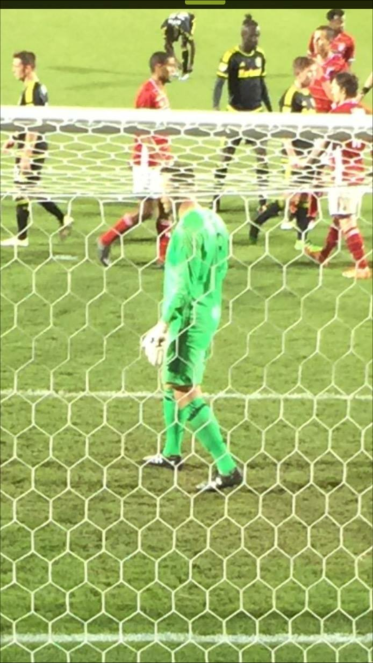
F C Dallas in action

Women and Advertising

Most of the money the media makes is from advertising, so they go all out to get it done in a way appealing to the public. For the most part, women have a lot of roles to play in ads, but they do have a lot of demands and restrictions that drive them crazy if you will.

It is not far-fetched to know that their self-confidence and self-esteem are affected by the initial order to stay thin. Girls are supposed to be sweet and soft and sexy and be attractive.

To get to that point, they eat tiny portions of a meal in order not to put on weight and for those that may have put on a few pounds, employ different tactics to lose as much weight as possible including starving.

Most of the ads I decided to take a look at, show that these women go at length to look good for the cameras. They certainly do their level best to fit in clothes that make their sizes look smaller on the screens.

In some of these ads, the depiction of women was mostly sexual as it is clear that sex sells. It seems as if society is comfortable with it and is on to it in almost every aspect of life. These acts have been going on for ages.

It has become commonplace to have sex images in almost everything in our daily lives.

Things have changed a little bit regarding the way the media represent women in the past.

In the recent advertising of women especially, homemakers were not entirely friendly, and that was not only damaging to their image, but it was also demoralizing. Perhaps the women’s movement had something to do with it.

Society’s understanding of beauty has not changed much over the years. Still today, the ads are full of fair skinned, thin and perhaps long and curly hair women.

Unpleasant Communication

There is no denying the increase in some hate groups in the country became more pronounced after America elected its first black president. The behavior or manner of speech of those who hate become conspicuous enough to draw public attention. It is agreed by many that to have hate in the open makes for awareness that could lead to efforts to condemn it.

The proliferation of hate groups has the internet as a participant in a process beyond a scope never before seen. That is not to say the internet is to blame since it is there for all to use. Limitation of its purpose as a communication vehicle to only one school of thought will intensify any negative aspect of the internet.

Hate crime is illegal, but hate-speech is not unless with certain exceptions. The First Amendment carefully guards free speech and hate groups have wasted no time in utilizing it to its capacity.

Certain categories of people such as gays, Jews, and blacks have been the subjects of hate speech which in itself is bad enough. But justifying hate with faith especially Christians who use the Bible to prove it, fall short of their ethos.

Hate is not the monopoly of one religion as we know and it is not confined to just religious groups. There are supremacist groups as well that raise eyebrows. “The most extreme manifestation of hate crime but a far more widespread form of expressing bigotry is through hate speech.” Lind (2013)

Over three dozen states had legalized gay marriage, but there are still some resentments with groups that claim it is an act of decline to a low level and that it threatens families. These are merely claims.

Mike Wallace had to apologize for his controversial 1967 documentary of gays being “harmful to society than adultery, abortion or prostitution.”


Men and women hurt in society

This winter, my reading list has to include all three of Chimamanda Ngozi Adichie’s novels. I watched her speech given on feminism more than once thinking to myself, here is someone who has positioned herself to promote the cause of women and perhaps believes all is well with us men. Looking at her pedigree, she is an elite with educated parents in a country with a large percentage of not so successful women.

When the term gender gets used, our minds run mainly to women as if we men either don’t exist or that we are without issues. “A feminist is a man or woman who says there is a problem with gender as it is today and we must fix it,” She said.http://www.tedxeuston.com.

My understanding is that she is referring mainly to women.It is true that men are still in most positions of power, but there are too many of us that are powerless and susceptible to being hurt in various ways.

We are prone to engage in behaviors that make us open to many of the ills of society as are women.

Our health is failing faster than women; more men commit suicide than women. “Males take their lives at nearly four times the rate of females and comprise approximately 80 percent of all suicide.”  Callanan, J., & Davis, M.(2012) To compound the problem, some of us do not even know which gender we belong to until after we are well advanced in years, giving credence to the notion that indeed, we are problematic.

And when some of us discover our sexuality and make a choice that does not meet the approval of others, we are looked upon as a “threat to human existence” since we do not bear children. “Women can have babies; men can’t ”  said Adichie.

When we go by the dictates of culture, the choices are no longer ours. They are laid down for us, and we just follow what has been prescribed by past generations. Adichie disagrees saying, “culture is constantly changing, and culture does not make people, people make them.”

Men I am made to believe should not cry in order not to appear weak as it is the female gender that carries the emblem of weakness. But crying has been scientifically proven to do with testosterone suggesting why women cry more.So it is ok for us to cry.

The world is changing fast, and Miss Adichie’s efforts are a catalyst ensuring that we take notice of such changes as they relate to the female gender whom she portrayed as victims in society.

“It is a man’s world, but it is nothing without a woman’s touch,” a famous singer once sang. That was James Brown who himself is known to have had some problems with the ladies.

The world has changed since Brown acknowledged the significant role women play in our lives. There is no doubt that he knew that in as much as women cook well, to say that they belong in the kitchen like Adichie’s president in Nigeria claims is nothing more than a myopic view of the gender that gives birth to us.

Musician Fela Kuti had a song “Lady,” in which he depicts African women as not submissive to men. He claims African women prefer to be referred to as a lady and not a woman.If his lyrics were right, how come he was able to marry 27 of them? To have shared a man with 26 other women is never lady-like. And they were not coerced by Kuti.

Adichie talks about our masculinity and her along with the rest look to us to use it for protection should they need one. They expect us to open the door for them, pull the chair for them to sit, and make certain they serve themselves first at the dinner table. All, just common courtesy.